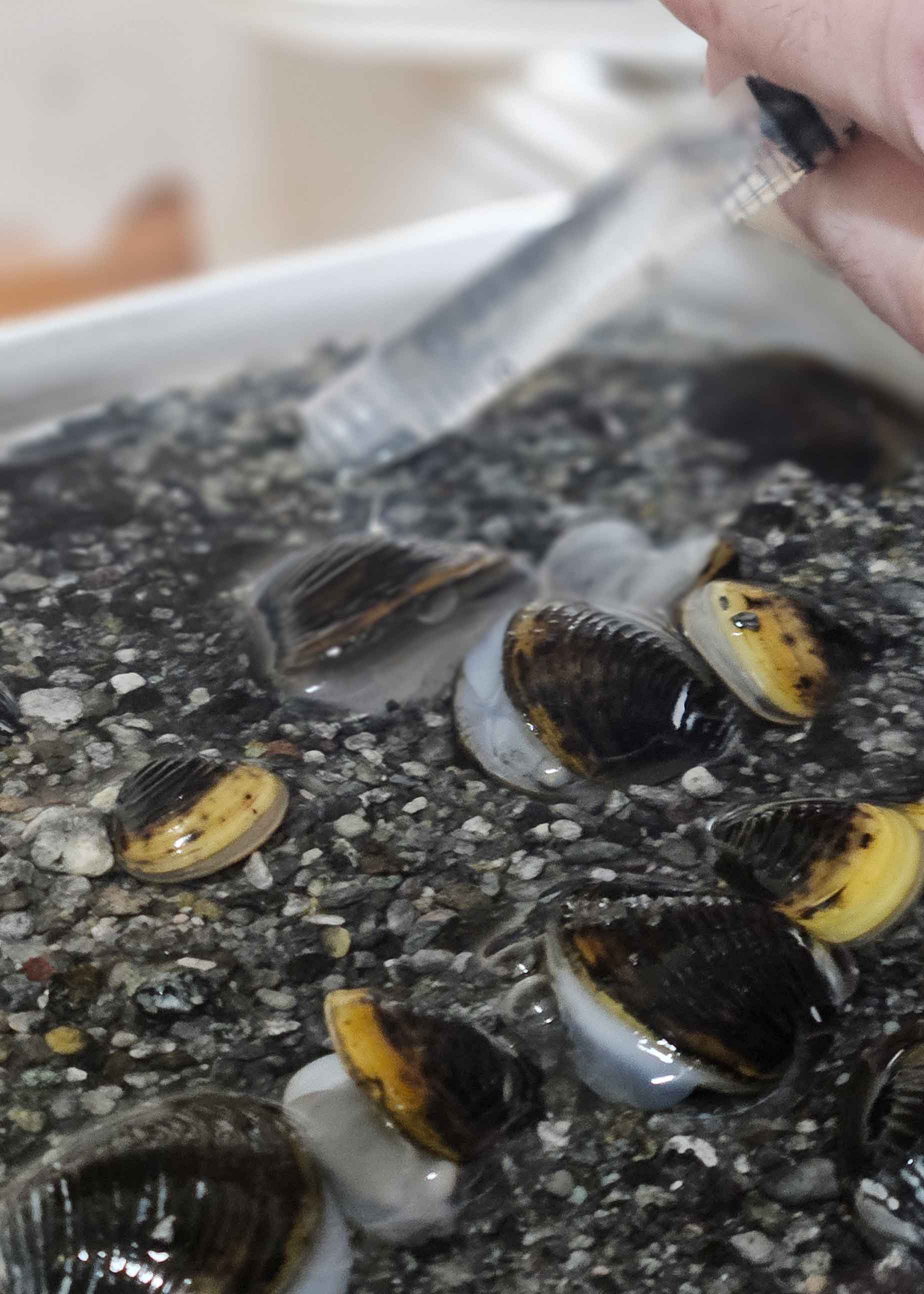
The invasive gold clam (Corbicula fluminea) is known for its ability to tolerate wide fluctuations in temperature, flow, and water chemistry. One of the few conditions that limits its survival is prolonged oxygen deprivation.
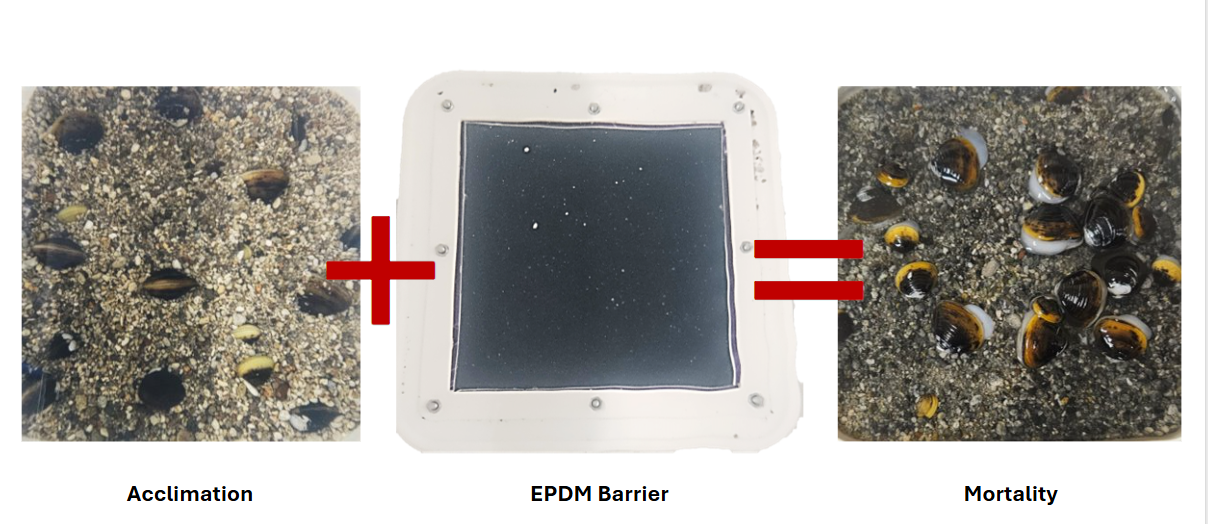
Gas-impermeable benthic barriers, specifically EPDM (ethylene propylene diene monomer) rubber pond liners, are currently the only non-chemical method shown to induce complete mortality in Corbicula fluminea populations in open-water environments.
These impermeable materials are placed over sediments to restrict water flow and oxygen exchange, creating localised hypoxic or anoxic conditions beneath the barrier.
For example, in Lake Tahoe (USA), dissolved oxygen beneath small EPDM barriers declined to zero within 72 hours at an average water temperature of 18 °C, resulting in 100% Corbicula fluminea mortality after 28 days.
Our research
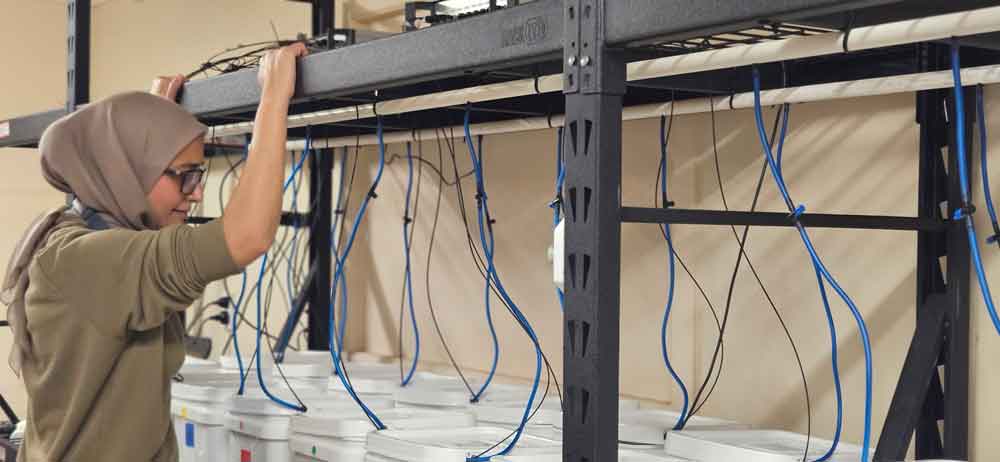
To improve the efficacy of conventional benthic barrier treatments and reduce treatment timeframes, Earth Sciences New Zealand researchers are currently conducting small-scale laboratory experiments to evaluate barrier performance under controlled conditions.
Because barrier efficacy can vary depending on environmental conditions, Earth Sciences New Zealand is testing EPDM under different temperature regimes to determine how temperature influences time-to-mortality and overall treatment effectiveness.
Understanding temperature-dependent mortality is critical for determining optimal seasonal deployment windows and minimising disturbance in New Zealand freshwater systems.
Core Team: Dr Michele Melchior, Dr Harizah Hariz, Yeri Shim, Peter Williams, Dr Rachel Crawford. Thanks also to Dr Shad Mahlum, Fern Kumeroa, Blake Ambassadors Anna Meikle and Eleanor Thorpe, as well as Summer Earth Sciences NZ Te Kūwaha intern Fleur Passau.