Building relationships between diverse knowledge systems, particularly Mātauranga Māori with scientific research, underpins our work in the Stopping the gold clam MBIE-Endeavour programme.
Our approach is holistic, ensuring that all aspects of the programme are informed by Mātauranga concepts and partnerships, in doing so supporting indigenous perspectives and values in environmental management.
Ngaa Muka Development Trust
Nadia Coombe (Ngaati Hine ki Waikato Tainui) and Kelvin Tupuhi (Ngaati Hine me Ngaati Naho ki Pare Waikato, Te Uri Karaka o Ngaati Paoa ki Pare Hauraki) consider it a privilege to uphold the legacy of their tuupuna through their daily mahi, advocating for the wellbeing of the taiao in the North Waikato on behalf of their marae and the Ngaa Muka Development Trust.
Their work is grounded in a commitment to kaitiakitanga and a belief that meaningful environmental progress is achieved when Maatauranga Maaori and modern technology are woven together.
In the fight against gold clams, alongside Earth Sciences NZ, Nadia and Kelvin are developing maatauranga-led detection methods that can be shared with mana whenua around the motu in the hope that early detection will allow for mitigation strategies to manage further spread and impact.
The application of korero tuku iho and the ways that our tupuna collected kaaeo can be revitalised and developed for trial alongside scientific techniques. Methods such as harakeke passive samplers and maanuka bundles on the riverbed can be further refined in consultation with iwi of the Waikato awa and trialled alongside scientific methods at five sites along the awa and her tributaries.
This project keeps maatauranga alive while working towards protecting our tuupuna awa.
Partnering with Ngaa Muka Trust and the University of Otago
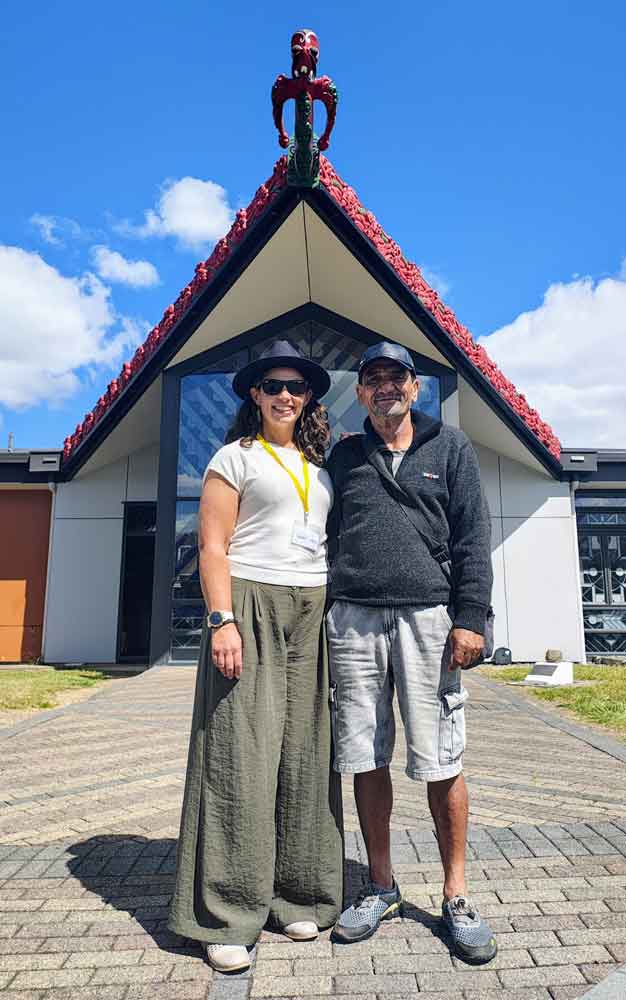
ESNZ has been working with the Ngaa Muka Development Trust (Nadia Coombe and Kelvin Tupuhi) and the University of Otago (Dr Nathan Kenny) to improve detection methods for the invasive gold clam and native kaaeo (kākahi). We are developing maatauranga Maaori, and western science-led methods together across and within different aquatic environments (e.g., from the water in streams, rivers and lakes).
The Ngaa Muka Trust and ESNZ initiative is described under the Urutaa Whakahaere project, and compares a range of approaches including tahitahi, whariki, benthic detection methods (e.g., clam nets), water column sampling (e.g., larval plankton nets) and molecular methods (e.g., eDNA) for use under different environmental situations.
For example, when you want to detect veligers (very young clams) in the water versus amongst the substrates (river/lakebed) different methods will be better suited for each habitat.
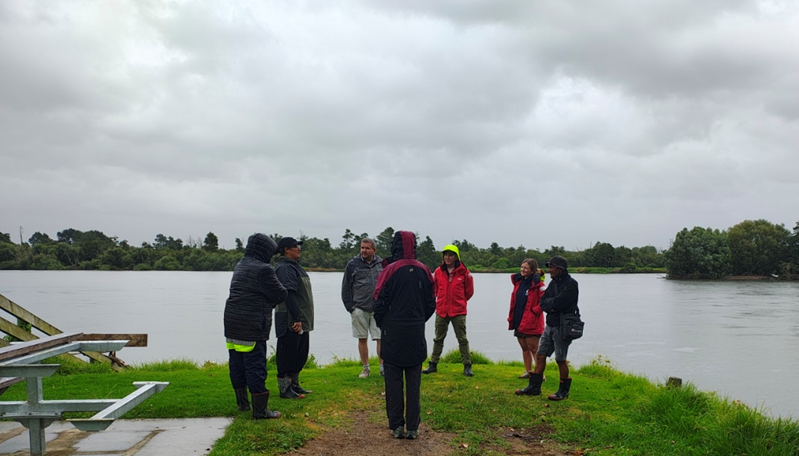
Within this collaboration we have identified sampling sites along the awa and within surrounding connected habitats that will be used for method development and comparison over the next year.
This work has been the precursor to the “Better bivalve biosurveillance through partnership and cutting-edge molecular biology” project that has been successful in receiving funding from the Rangapū Rangahau fund. Congratulations Nathan, Nadia and their teams.