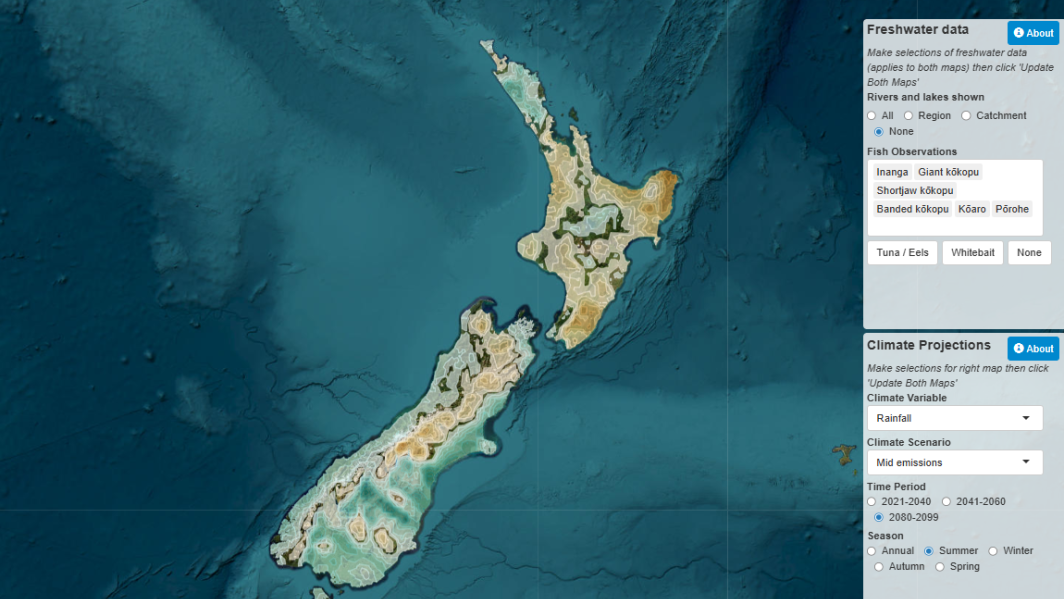
Climate change is impacting our freshwater cultural keystone species, habitats/ecosystems, biosecurity, water quality, land use and primary production, and disrupting Māori livelihoods and communities throughout New Zealand.
Complex environmental issues, such as mahinga kai and biodiversity loss, will be exacerbated by climate change and compounded by increasing conflicts between iwi/hapū food security and regional/national economic priorities.
More work is required by Māori in a safe cultural space to consider what their livelihoods may look like under a changing climate, including new relationships with future freshwater environments and cultural keystone species. To prepare for this, Māori want to understand how climate change will modify freshwater communities (e.g., tuna, kōura, kākahi, kanakana/piharau, īnanga, pōrohe, kōaro), their interdependencies, and the diversity of socio-ecological-economic systems they support.
The overarching vision of this five-year MBIE Programme is to co-develop climate change vulnerability assessments and predictive decision support tools that are able to reflect freshwater cultural keystone species, and the place-based cultural practices, knowledge systems and behaviours of iwi/hapū/whānau. This evidence-base will inform the spatiotemporal design of priority actions, plans and policies needed by programme partners to support kaitiakitanga, and increase food security, biodiversity and the resilience of cultural keystone species under a changing climate.
The programme is being delivered through a series of focus studies that are generally led/co-led by their iwi/hapū/Māori researchers and their partnerships, with support from universities, agencies, other researchers and/or NIWA. In this way the programme seeks to respond to a diversity of Māori voices and their research needs to deliver new transferable approaches drawn from multiple knowledge systems.