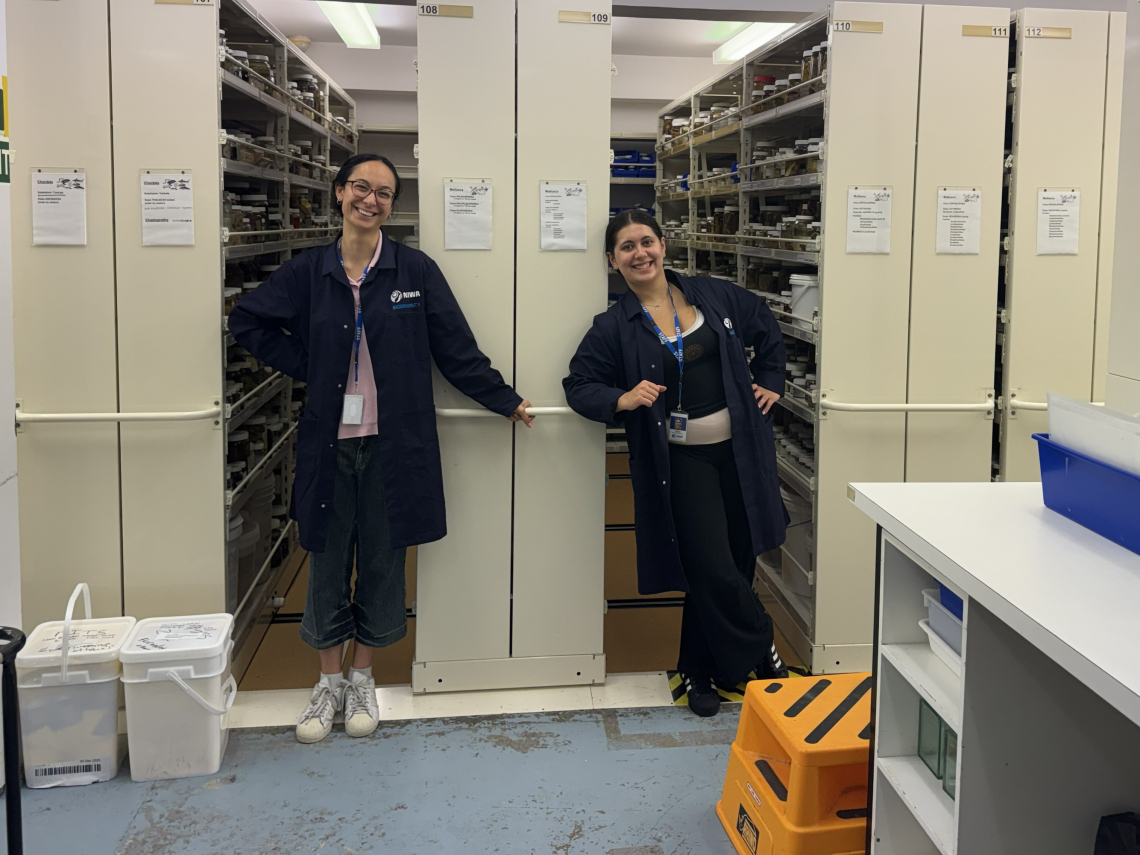
From preserved specimens to deep‑sea discoveries, two interns got a glimpse into marine science at the Earth Sciences NZ Invertebrate Collection (NIC) this summer.
The NIC internship programme aims to offer opportunities to rangatahi from Taranaki Whānui, Te Ātiawa and Ngāti Toa Rangatira, where the facility is based. Maia Renata Horn and Tusiata Buchanan-Falema’a joined the team from November to February, working within the NIC and helping on research surveys.
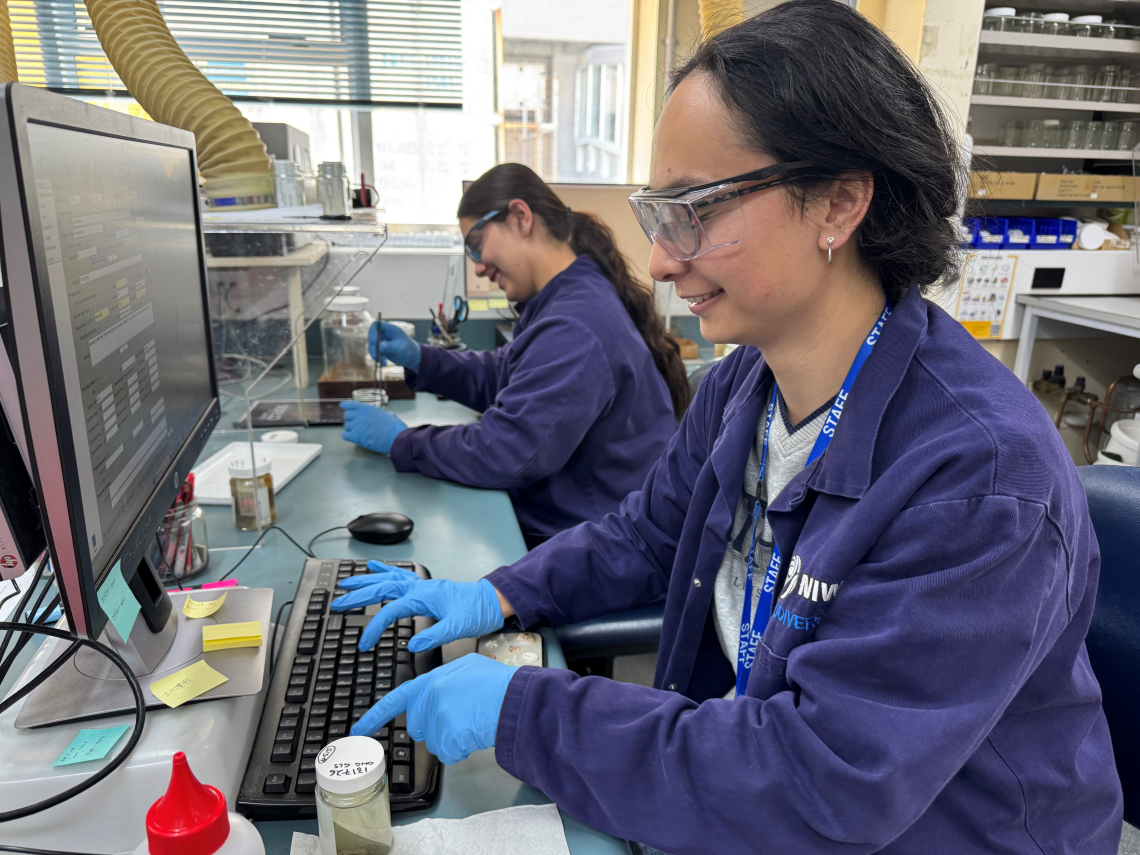
The pair were primarily based at the NIC, an important national collection described by Tusiata, “For anyone who isn’t certain an invertebrate is the term refers to any animal species that lacks a backbone. So, think of things like snails, octopus or worms. The collection houses over 350,000 different invertebrate specimens that have been collected throughout the Pacific, Aotearoa and Antarctica, with records dating as far back as the 1950s.”
The two interns were supported day-to-day by Collection Manager, Sadie Mills, whose guidance and expertise were central in their summer experience.
The duo’s first assignment was to look at sea sponges, “we had buckets of them that had been returned from marine biologist Michelle Kelly, who had given them updated identifications,” Maia says. “Tusiata and I worked to update these ids in Specify and rejar the sponges before we put them back into their collections in their specific location. Buckets meant there were a lot of jars that were completed, and there were many different ids that we came across.”
Maia and Tusiata put in a herculean effort to enter and update over a thousand Scaphopods (a class of small molluscs) into Specify, a tool the collection uses to store information on all the specimens.
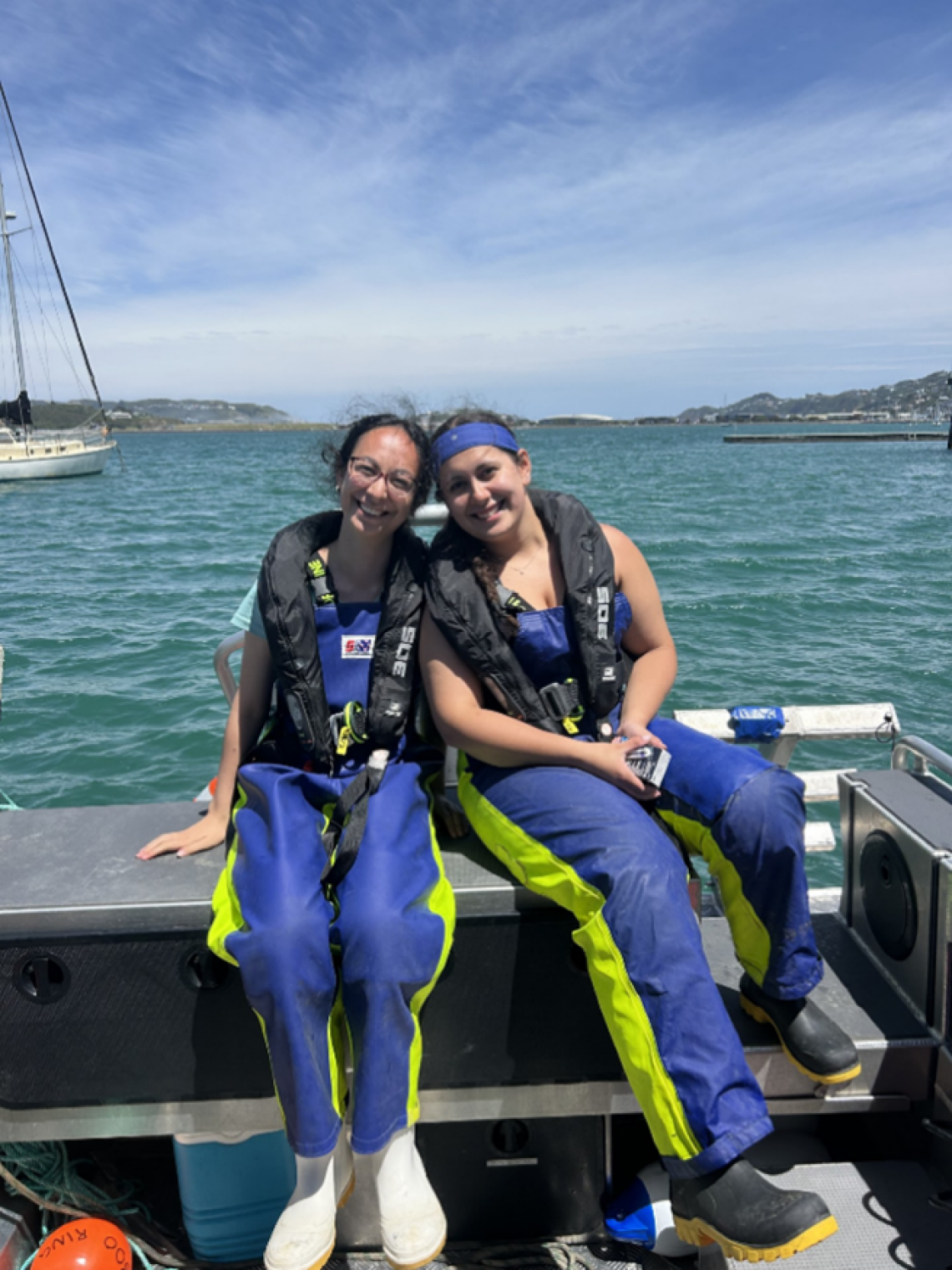
But their days weren’t limited to the lab and collections. They also tried their hand at field work, Maia first headed out on the small research boat Kimiora and participated in the benthic sled port surveillance in Wellington. “Benthic sledding uses the seamount sled to obtain large benthic macrofauna samples to describe and check for invasive species in Wellington harbour,” says Maia. “Over two and half days of sledding native species in the harbour included Patiriella starfish and cateyes snails, I had an amazing time and gained valuable experience.”
Tusiata also aided port surveillance, spending time on the Rukuwai trapping boat. This involves looking for invasive predators like the Chinese mitten crab or the northern pacific sea star by setting and retrieving traps.
“Setting the traps involved putting a pilchard (small kind of fish) into a small basket inside the trap and loading three onto a rope and then throwing the traps into the ocean or on various areas of the marina, we kept track of where the traps had been set through mapping systems on iPads as well as the fact that each set of ropes had a bright orange buoy that made it easier to see if the floated from their original position.”
Tusiata and Maia even had time to learn from the world experts, including Brittle star expert Tim O’Hara from the Museum of Victoria in Melbourne. They used an electron microscope to better see the structural differences in the small features of the brittle stars and their jaws.
Looking ahead, both the interns are focussed on building the skills and experiences gained through the programme. Tusiata will now go on to complete her third year of a biological sciences and Te Reo Māori degree at AUT, while Maia will start a MSc on Sperm whales at University of Otago.
The NIC interns were supported through Te Piko o te Māhuri, a Te Kūwaha initiative that provides pathways and opportunities for emerging Māori researchers.
“We really appreciate the hard work that Tusiata and Maia put in this summer,” Saide says. “We are passionate about working with rangitahi, to give them a taste of work in a scientific institute and help us to build connections with their iwi.”