
The rapid expansion of the invasive gold clam (Corbicula fluminea) population in the Waikato River has potential impacts on water quality and security. Dense clam populations have been identified as contributing to changes in calcium and carbon cycling, reducing benthic oxygen levels, elevating the risk of harmful algal blooms, and presenting challenges for drinking water treatment operations.
This work is an ongoing area of investigation between Lincoln Agritech and Earth Sciences NZ so that we can better predict impacts and determine what mitigation options can be put in place. These findings are pre-publication and subject to peer-review. We are sharing due to the timeliness and public interest.
Timeline and spread: A biosecurity incursion without precedent
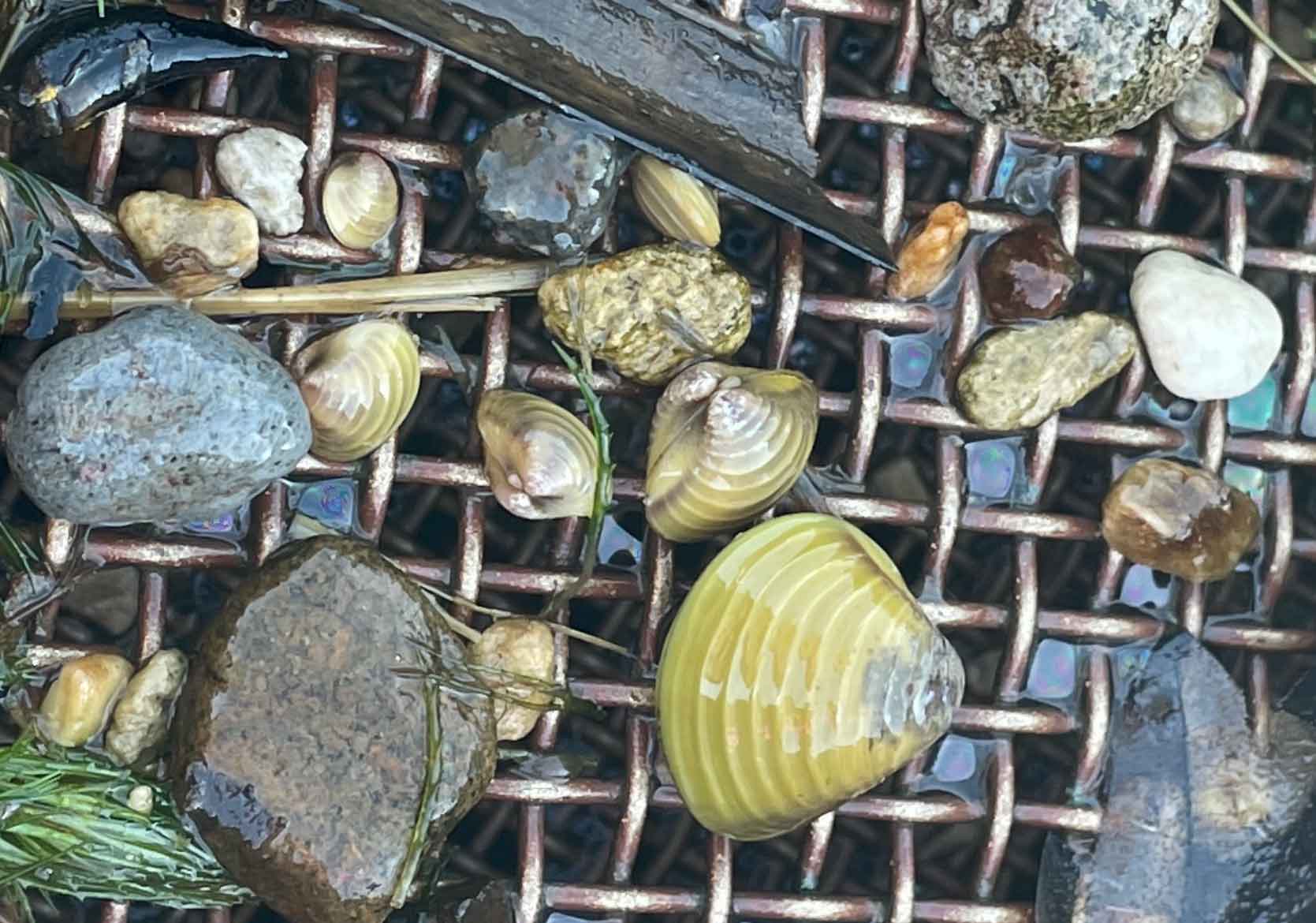
The initial detection occurred in May 2023 at Bob’s Landing, Lake Karāpiro. The species has exhibited rapid expansion within the river and is confirmed from Lake Maraetai to Port Waikato. Reproductive capacity is high; a single hermaphroditic clam may produce approximately 70,000 juveniles each year.
What have we found?
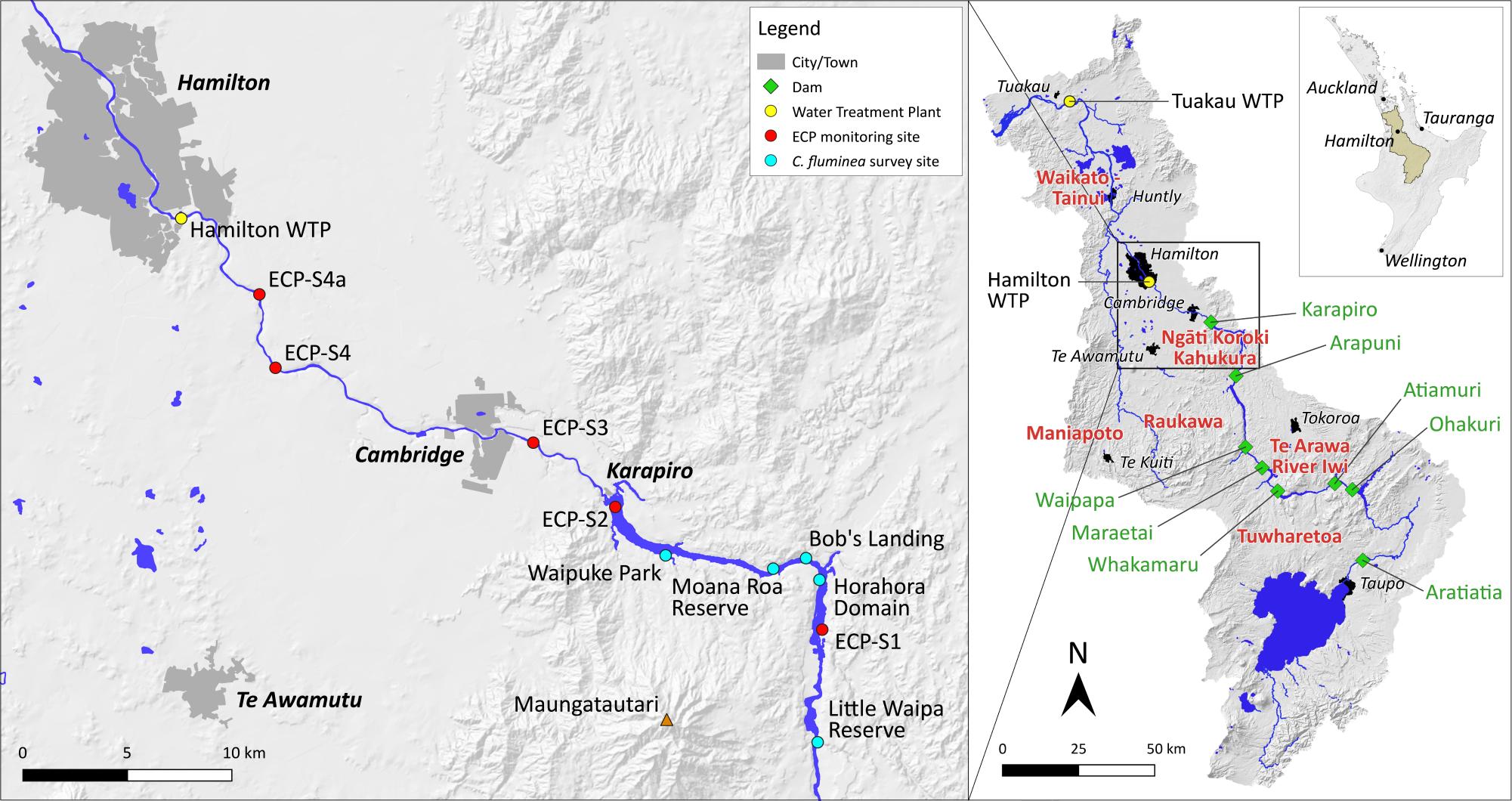
Karāpiro research sites
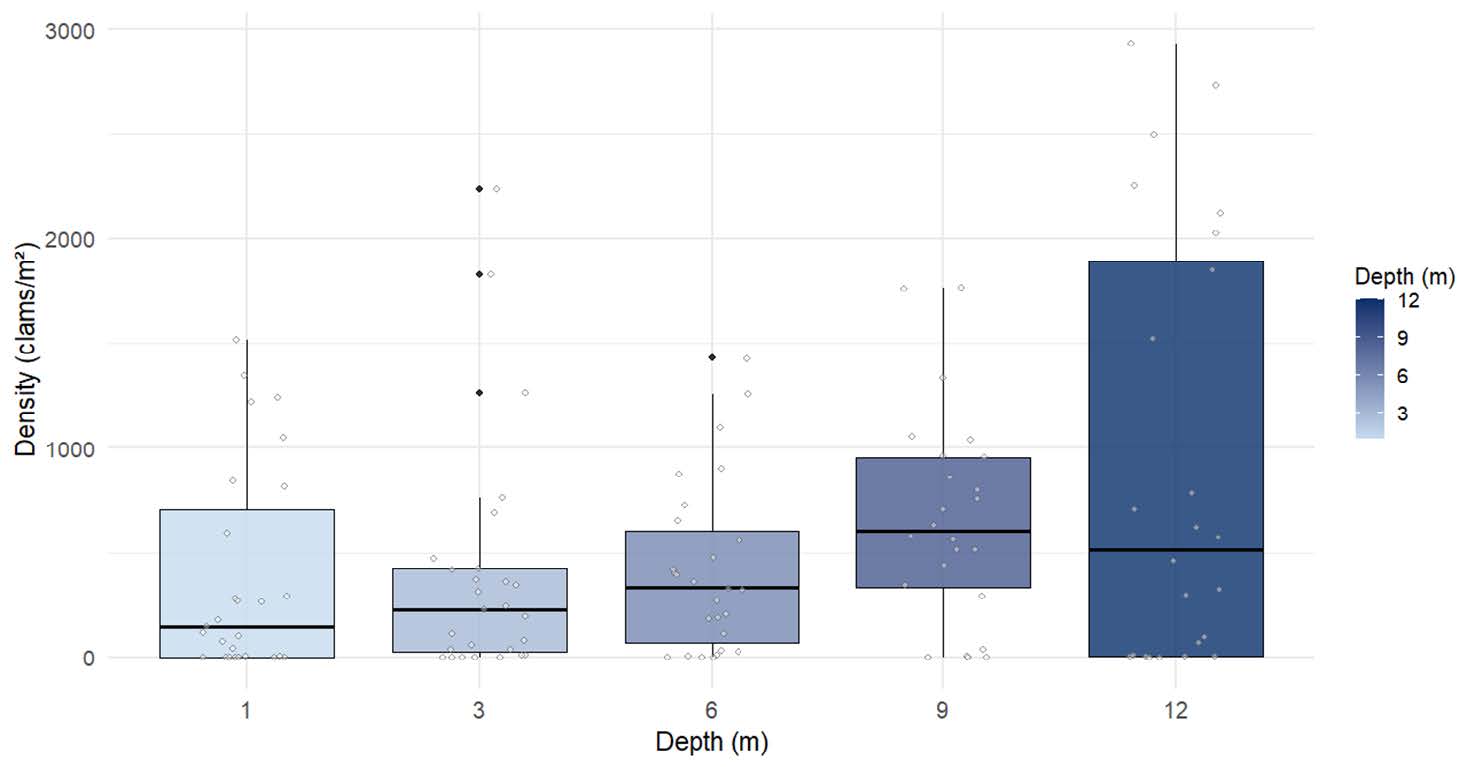
Recent surveys in 2025 have identified hotspots with densities exceeding thousands of individuals per square metre, and greater numbers in deeper waters of 12–15 metres.
Dredge samples show that the invasive clam also occurs at greater water depths (30m).
Mass balance modelling (Lincoln Agritech) yields population estimates that are aligning with the field survey data (Earth Sciences NZ).
Shore and dive team survey results
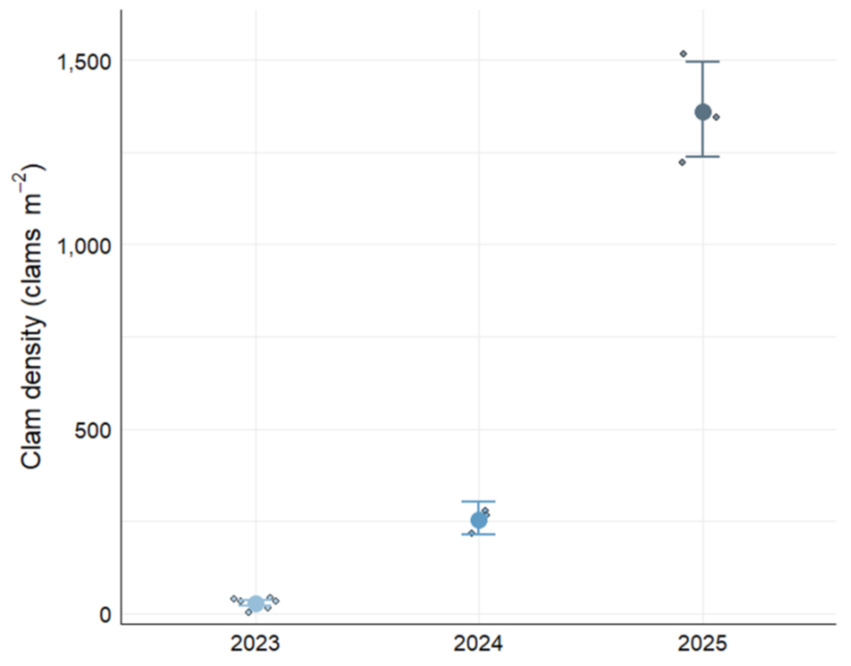
Population growth: Example from the shallow water at Horahora, Lake Karāpiro
We are seeing chemical shifts in the Waikato River linked to the invasive gold clam abundance over time:
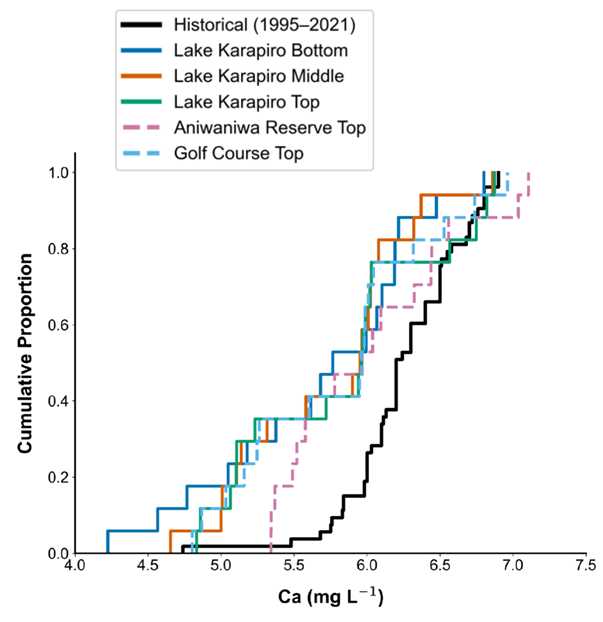
- Basin-scale calcium depletions signal impacts of shell formation and filtration by the invasive clam
- Alkalinity enrichment due to ammonia excretion (protein metabolism).
Lincoln Agritech modelling reveals that chemical changes in the Waikato River directly reflect the surge in gold clam numbers. Mass balance calculations confirm that as gold clam populations climb, there are escalating depletions of key elements like calcium and dissolved oxygen across the river basin.
Water chemical changes associated with the surging gold clam population
The invasion of gold clams is reducing vital minerals such as calcium in infested waterways, which interferes with arsenic removal during water treatment.
During peak summer, gold clams in Lake Karāpiro are removing an estimated 30 - 50 tonnes of calcium carbonate from the water every day (basin-scale calcium depletion modelling indicates typical densities ranging from 300 to 400 individuals per square meter). By 2025, dissolved calcium levels had fallen 25% compared to historical averages, marking a sharp decline.
As the clam population increases this could lead to a water treatment challenge. Calcium is essential to the formation of ‘flocs’ - clusters that trap contaminants like arsenic. When calcium drops, floc formation is weakened, resulting in less effective arsenic removal.
This change potentially impacts public health as the Waikato River source serves over two million people. Brief episodes of arsenic levels exceeding standards have already been recorded (late 2024 event).
Climate change intensifies the issue
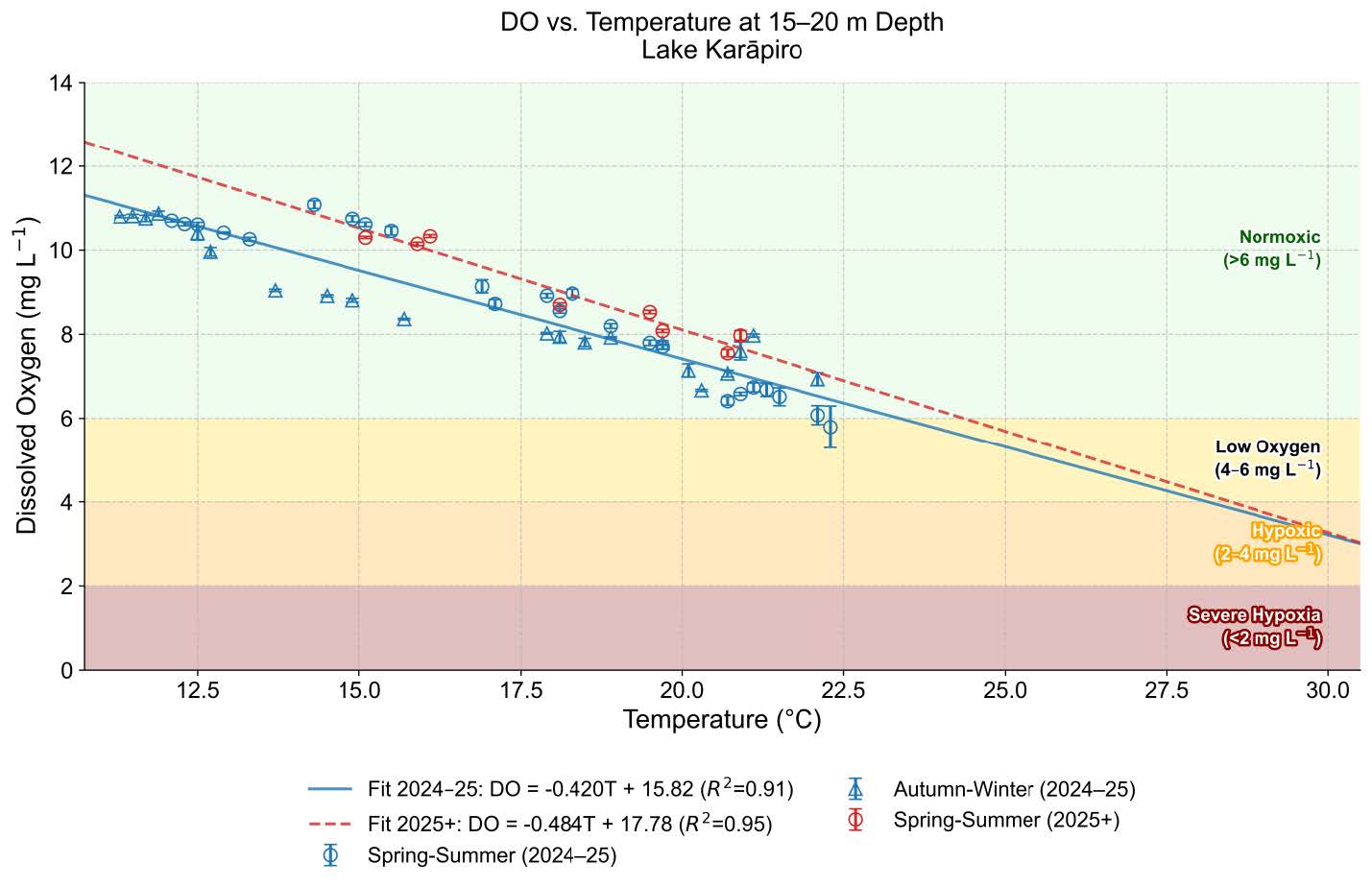
Climate forecasts predict more frequent hot, dry spells such as heatwaves and droughts. These conditions can lower river flows and raise water temperatures, which in turn reduces dissolved oxygen and leads to low-oxygen areas and the potential for hypoxic events, that could trigger mass clam mortality. Mass die-offs of clams could mobilise arsenic and phosphorus from sediment, fuelling harmful algal blooms and fish kills. This would further deplete dissolved oxygen.
Gold clam metabolism is temperature sensitive, as clam populations increase and water temperatures rise there is likely to be further depletion of dissolved oxygen. This relationship has already been seen during the 2025 summer with depleted benthic dissolved oxygen in Karāpiro (see figure 5).
Consequences of mass mortality might include water supply restrictions for affected communities, ecological damage such as fish kills and impacts on native species, and economic disruptions for industries dependent on the river.
What are our management options?
First and foremost, stop the spread:
- Check, Clean, Dry to prevent the spread to other waterways.
- Development of decontamination options: Earth Sciences NZ, commissioned by MPI, tested chemical and physical treatments to eliminate juvenile C. fluminea completely. Their results offer useful guidance to support biosecurity measures such as “Check, Clean, Dry,” reducing the risk of spreading this invasive species via recreational gear and boats.
- Ongoing monitoring of the lake water and clam populations provides a crucial, independent way to track the progress and impact of the gold clam invasion and to support management and infrastructure decision-making.
- Development of tools that predict the dispersal and future establishment of clam populations to enable the prioritisation of location for monitoring and early intervention.
- Co-develop a suite of control tools that target vulnerable gold clam life-stages to disrupt dispersal, reduce the risk of transfer, and to manage the gold clam at different scales, including site-based eradication. Research underway includes benthic barriers and acoustics, and additional studies on decontamination.
Find out more:
Article
The Conversation: Gold clam invasion in NZ threatens drinking water for millions of people
Presentation
Title: The Gold Clam (Corbicula fluminea) Invasion in the Waikato River: Cross-Agency Implications for Freshwater Security, Ecosystem Health and critical infrastructure
Abstract: The recent detection and rapid spread of the invasive golden clam (Corbicula fluminea) in the Waikato River represents one of New Zealand’s most serious freshwater biosecurity incursions to date. Dense clam populations have already been implicated in altered calcium and carbon cycling, depleting benthic oxygen levels, increasing the risk of toxic algal blooms, and raising concerns for drinking-water treatment processes serving up to two million people. The species also has the potential to foul hydropower infrastructure, displace native bivalves, and alter food-web dynamics across the North Island.
Presenters: Deborah Hofstra (Earth Sciences NZ) and Adam Hartland (Lincoln Agritech)
View/download: Presentation to the MfE led stakeholder forum on 5 February 2026 [PDF 3.4 MB]