-

'Eleven-station' series temperature data
Research ProjectTemperature trends from 1930s to present day -
West Coast
West Coast is New Zealand’s wettest region, and this may be attributed to its exposure to the predominant westerly airflow over the country, combined with the orographic effect of the Southern Alps. -
Climate data and activities
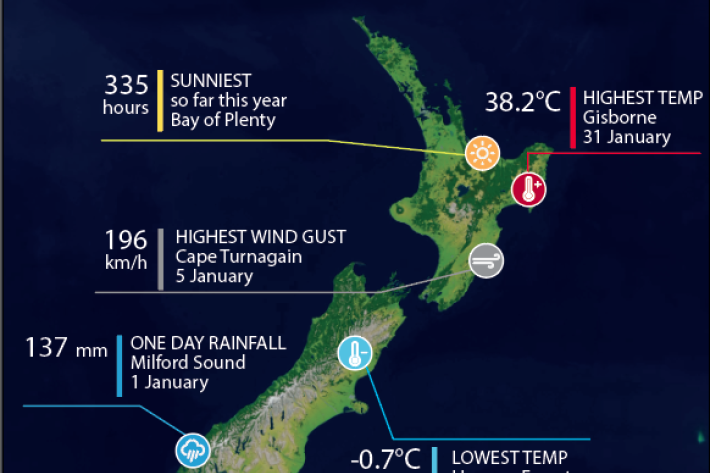
We provide an overview of New Zealand climate data for use in school projects. -
Map Alpine
Education ResourceMountainous areas are subject to heavy snowfalls, high winds, and low temperatures. Semi-permanent snow and ice fields exist at about 1000-1100 metres during winter. -
NIWA staff profile: Nava Fedaeff
Feature story06 June 2017At the age of seven, NIWA’s youngest climate scientist, Nava Fedaeff, swapped sub-arctic Siberia for balmy Auckland – and her first job was to learn to swim. -
How do we determine past climate?
Information about past climate is obtained from piecing evidence together from various sources. -
Otago
The climate of Otago is perhaps the most diverse of any region in New Zealand. -

PARTneR (Pacific Risk Tool for Resilience)
Research ProjectUnderstanding how hazards impact people and the environment provides the foundation for informed decision making for a resilient Pacific. -
Mean 10cm earth temperature (°C)
These datasets are available in a range of formats.