Koroi Seniroqa from Fiji uses bathymetry to model and mitigate tsunami risk, but until recently he had never seen how the data is produced.
Through an internship with Sam Davidson at Earth Sciences New Zealand, Koroi gained hands-on experience in multibeam echo sounding, seabed measurement and the practical steps behind the data that supports tsunami modelling.
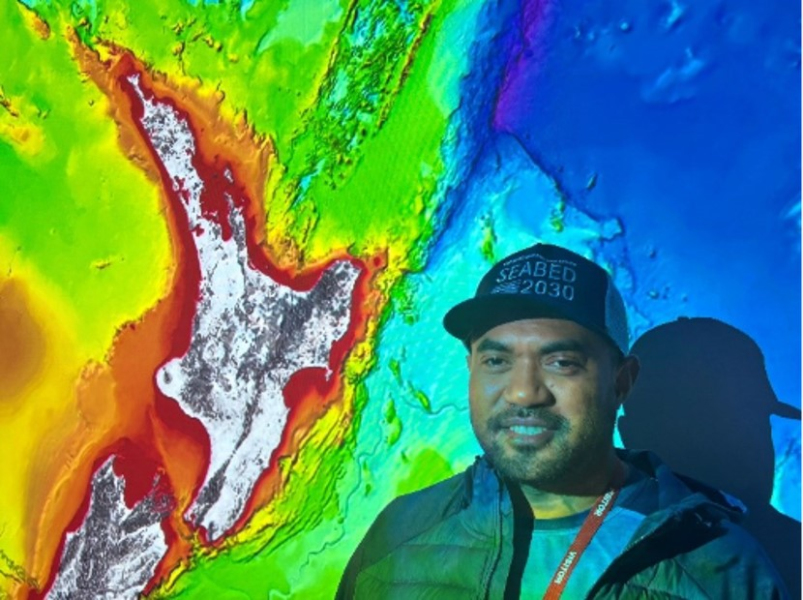
“I’ve been using bathymetry for two or three years to make tsunami models, but I didn’t actually know how bathymetry was produced,” Koroi said.
“I learned about multibeam echo sounders and how to physically measure the seabed. That was really interesting for me.”
He also found the data processing challenging and valuable, especially learning how much cleaning was needed and what should be removed from raw survey data.
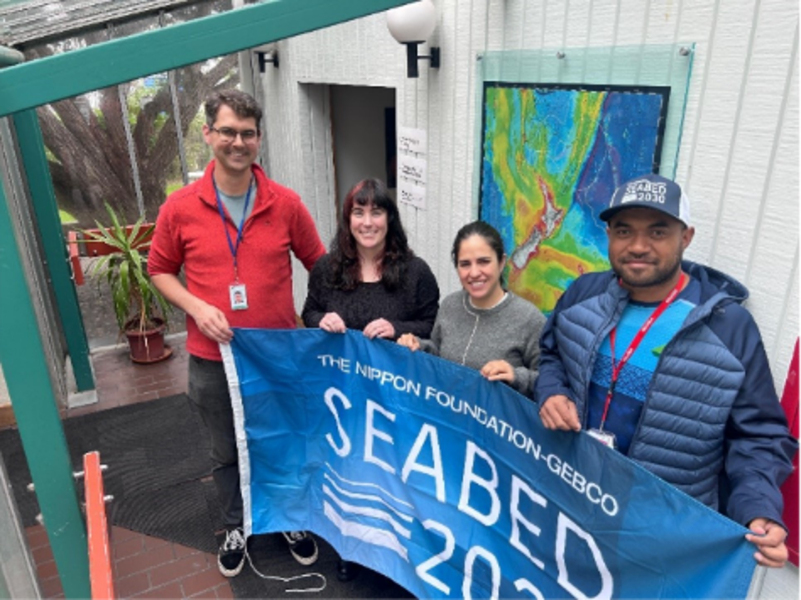
The internship is part of the 12-month Ocean Mapping graduate certificate offered by the University of New Hampshire, funded by the Nippon Foundation of Japan to train a new generation of scientists and hydrographers in ocean bathymetry. It also contributes to Seabed 2030, a global collaboration working to produce a definitive map of the ocean floor by 2030. Koroi was joined by Lucia from Argentina and Felicity from Australia, with the group also visiting other parts of ESNZ, including the National Geohazards Monitoring Centre at Avalon.
For Koroi, the experience highlighted the wider value of hydrography for Pacific hazard resilience.
“When I look at hydrographic surveying priorities, the focus is often on navigational safety. I think we should also be mapping for geological hazards such as underwater landslides and submarine volcanoes,” he said.
Koroi will take the knowledge back to Fiji, with hopes his organisation can continue to collaborate with Seabed 2030 in the future.