-

Kanae
Grey mullet have a worldwide distribution and Aotearoa is at the southern limit of their range. -
Nutrient overloading
Nutrients in waterways are essential for the growth of algae and aquatic plants but too much can destroy an ecosystem. -
Tau kōura sample collection and processing protocol
Tau kōura is a traditional Māori fishing method commonly used to harvest kōura or freshwater crayfish in areas where they are abundant. -

Educational Resources
Education ResourceProviding educational resources to school students and teachers is part of NIWA's commitment to helping young New Zealanders discover more about science and technology. -
Map E South
Education ResourceThe climate of this zone is greatly dependent on the lie of the massive Southern Alps to the west. -
Extreme weather - heavy rainfall
Education ResourceHeavy rainfall is one of the most frequent and widespread severe weather hazards to affect New Zealand. -

The process
The process of coming to work with us has five steps: applying, a phone interview, a face to face interview, background checks, and an offer. -
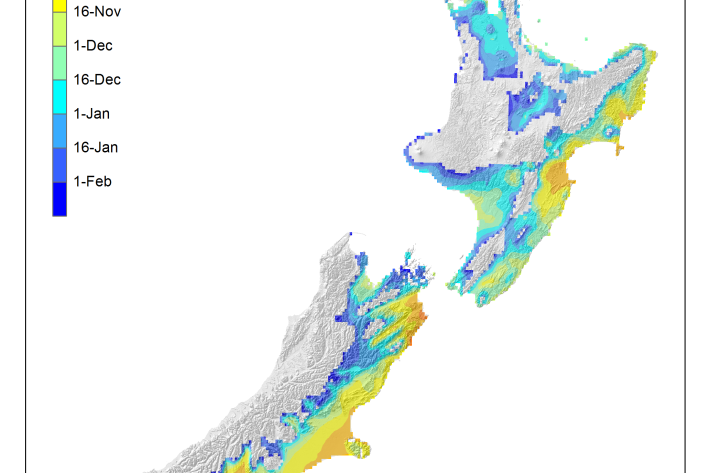
Average soil moisture deficit onset and termination maps
Maps of the average first and last dates of soil moisture deficit are shown here. -
How do we determine past climate?
Information about past climate is obtained from piecing evidence together from various sources. -
Temperature changes
Temperature affects the number and type of animals and plants that live in a waterway.