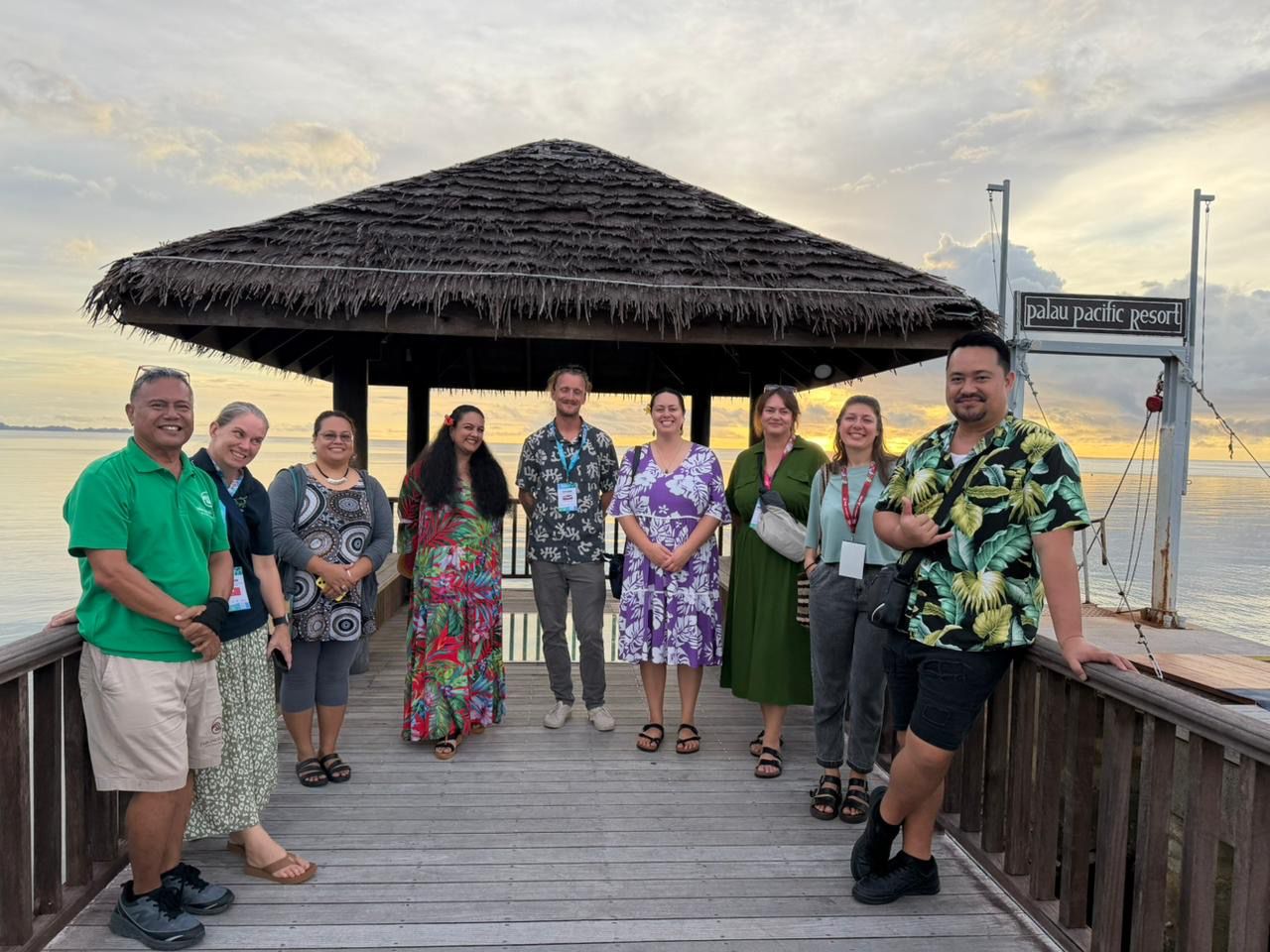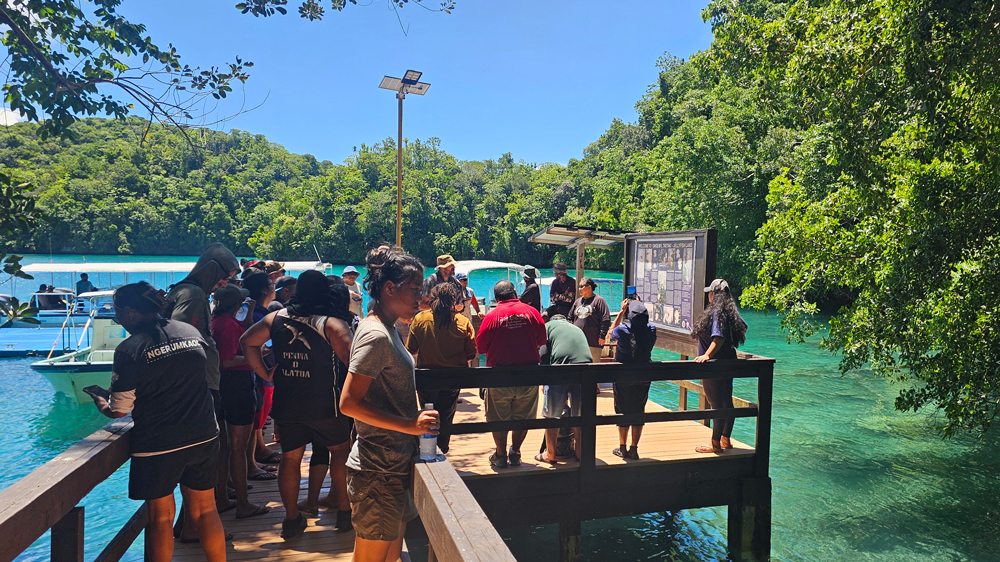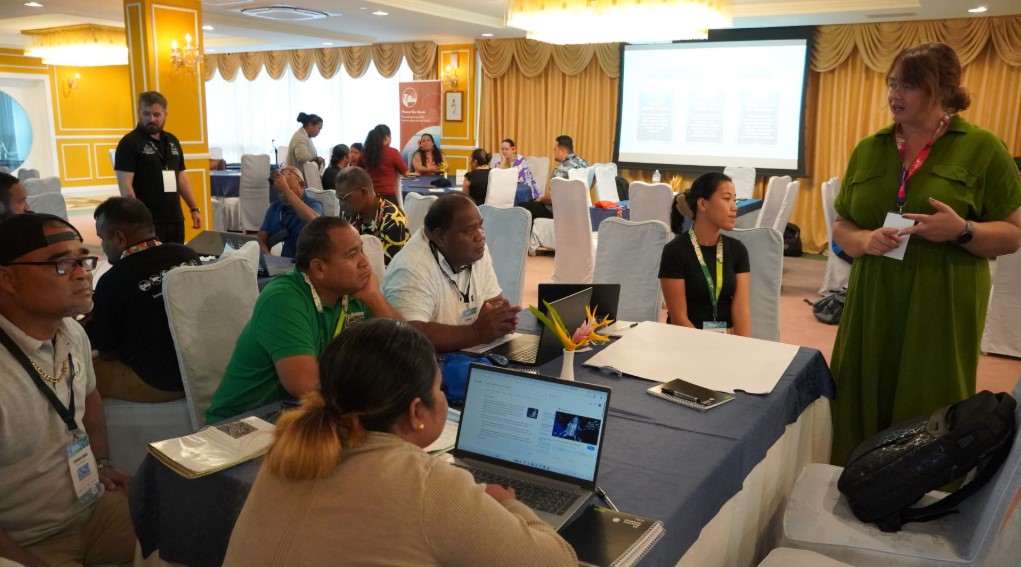
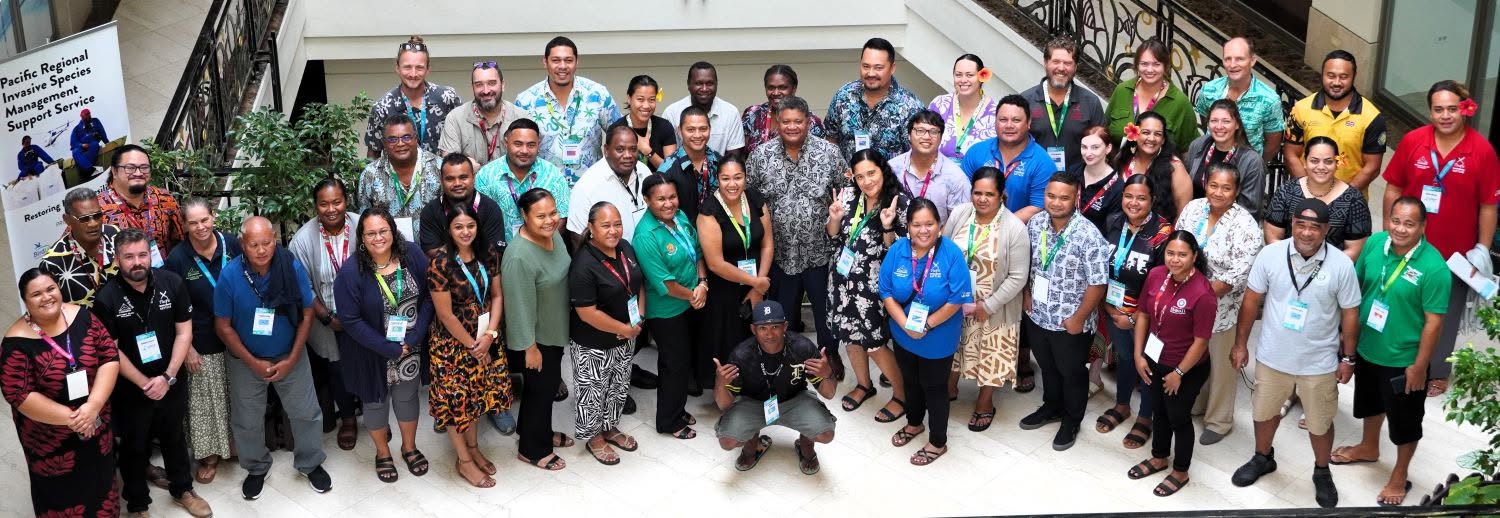
Country teams met in Koror, Palau, for the 7th Pacific Invasives Learning Network (PILN) meeting from 18–22 May 2026 to share practical experience in managing invasive species across the region.
Discussions covered a range of island and marine biosecurity issues, including rat eradication on offshore islands, community awareness, and ways to improve early detection when unwanted organisms arrive by ship, yacht or other pathways.
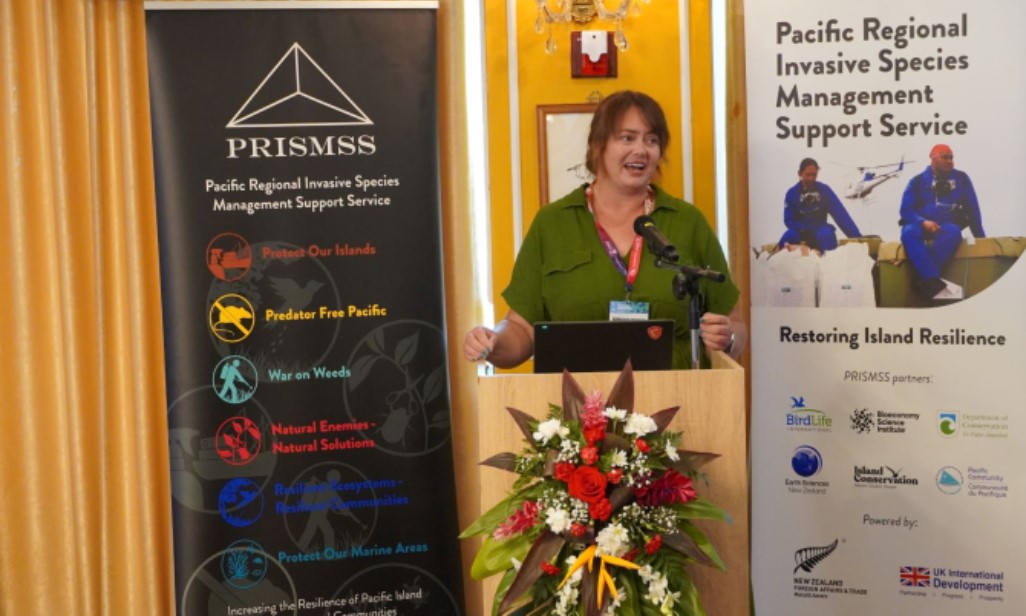
For Earth Sciences New Zealand, the meeting provided an opportunity to introduce the Protect Our Marine Areas (POMA) initiative, launched by Kimberley Seaward, who attended as technical lead. POMA sits within the Pacific Regional Invasive Species Management Support Service (PRISMSS) programme, which is supported by the New Zealand Ministry of Foreign Affairs and Trade. ESNZ’s participation in PRISMSS has been through its valued technical support to the programme management unit at the Secretariat of the Pacific Regional Environment Programme (SPREP), helping develop practical tools and training that respond to regional priorities.
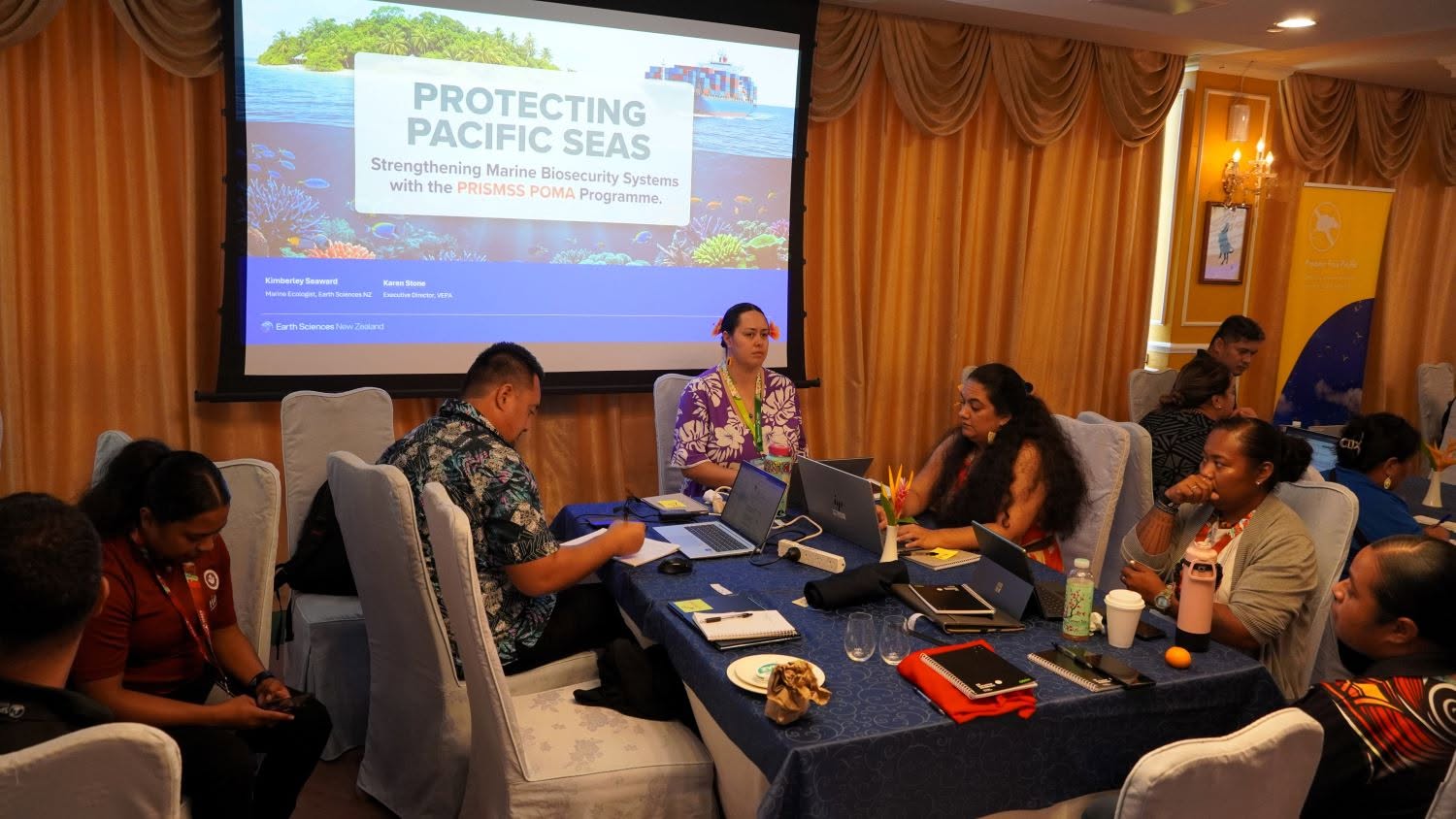
Kimberley’s presentation and hands-on session outlined how marine biosecurity can combine technical science with local knowledge and stewardship. The session focused on practical steps communities and agencies can take to identify risks early and reduce the chance of invasive marine species becoming established.
The meeting also included discussion of the Pacific Marine Biosecurity Toolkit, produced by Earth Sciences NZ for PRISMSS in 2022. The toolkit is designed as a step-by-step resource to help local teams build marine biosecurity programmes suited to their own countries. It includes guidance on checking boat hulls, managing ballast water and identifying 25 high-risk species that could affect local ecosystems.
Delegates were also introduced to the PRISMSS Navigator portal, which helps connect communities with technical expertise, funding pathways and support for activities such as marine surveys and diver training. Together, POMA, the toolkit and the Navigator portal provide practical support for countries working to strengthen marine biosecurity and protect biodiversity, livelihoods and Pacific cultural heritage.
Learn more: Protecting Pacific seas: Strengthening marine biosecurity systems | Pacific Environment