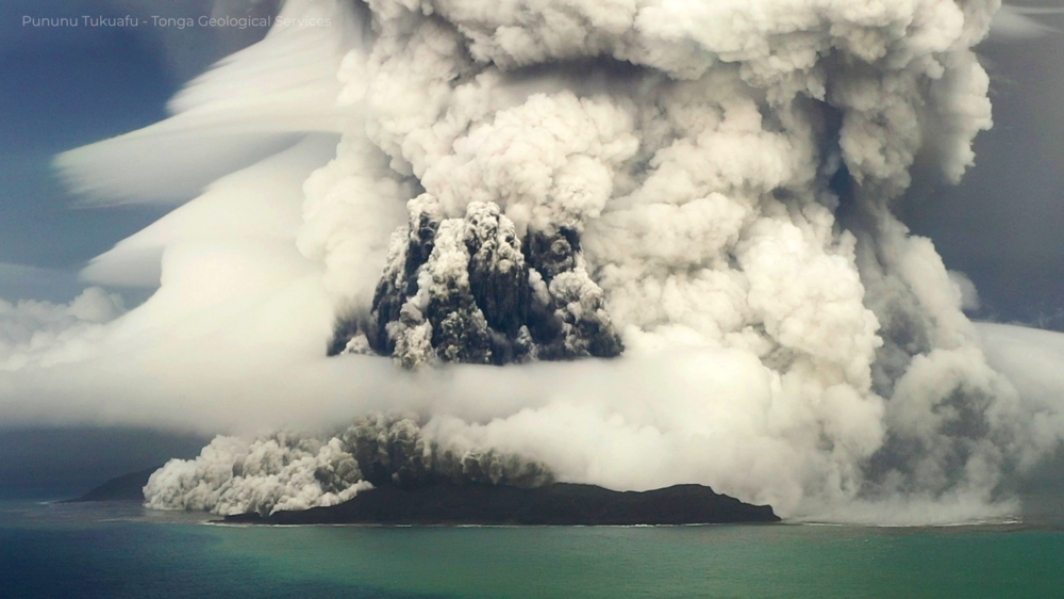
Earth Science NZ’s Flagship Programme Leader for Hazards, Dr Emily Lane, joined a cross-agency research visit to Ha’apai Islands in Tonga to assess the ongoing recovery from the 2022 Hunga Tonga-Hunga Ha’apai eruption and tsunami.
The team included researchers and practitioners from University of Canterbury, Massey University and the Tongan Geological Service.
The group met with a wide cross-section of government agencies to understand the impacts and recovery progress in Ha’apai. While damage in Ha’apai was less severe than in outer islands like Mango and Nomuka, the fisheries sector was heavily affected—coral reef damage, loss of fishing vessels, and destruction of all 12 pearl farms.
Ecological shifts were observed, including increased kina populations and the curious emergence of “tsunami watermelons” growing in coastal areas. It was unclear if this was due to propagation of watermelon seeds by the tsunami, increased soil fertility from ashfall, or a combination of factors.
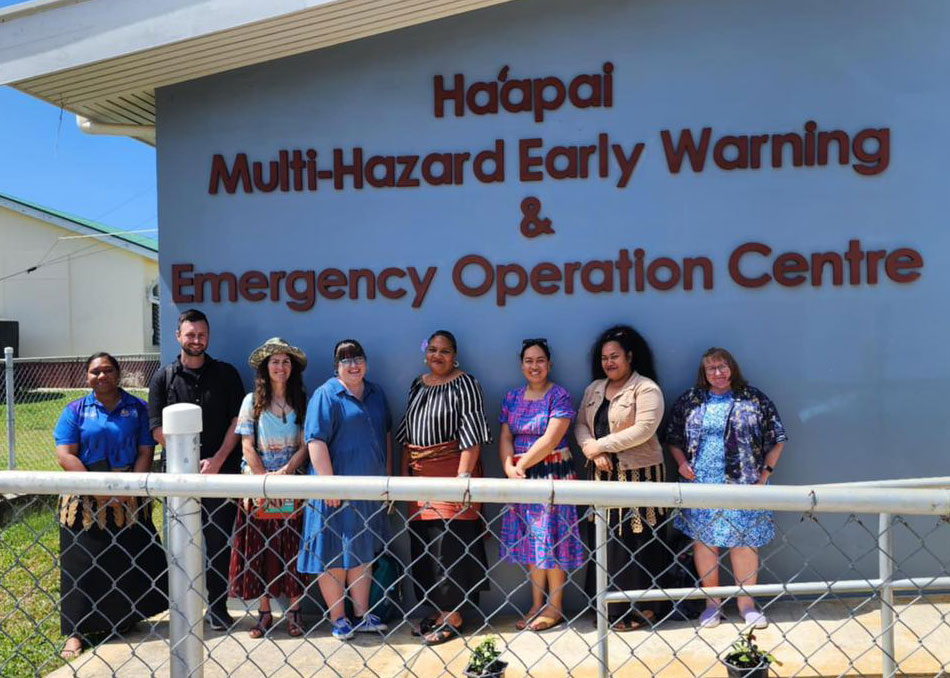
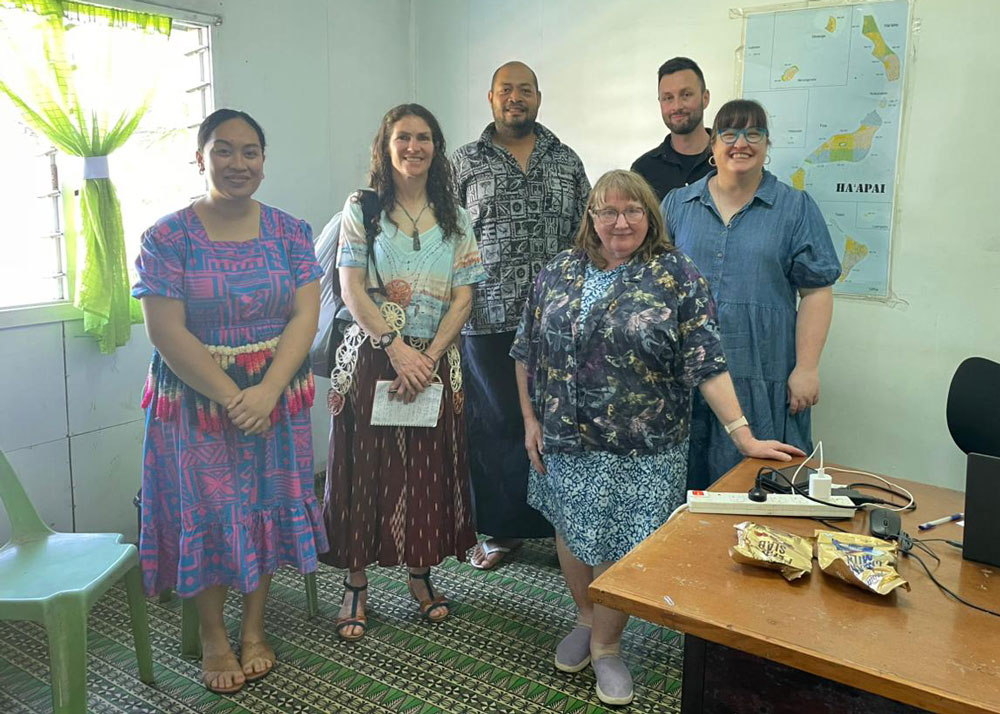
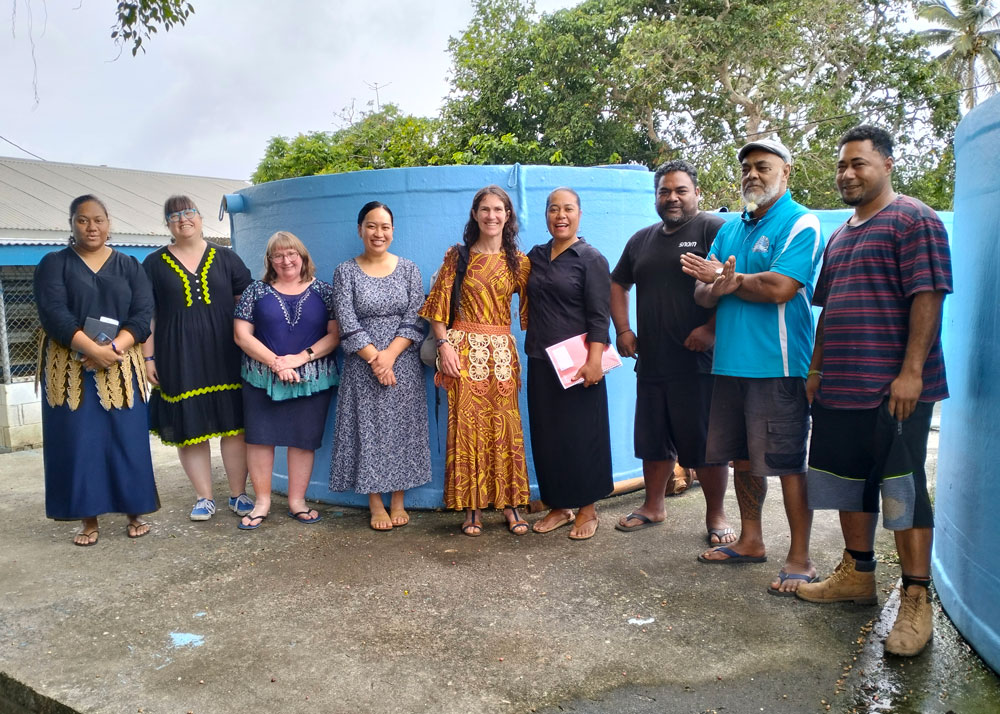
The team also visited a community centre and tsunami shelter under construction by Sione’s Foundation and hosted a workshop to share findings with local communities, including insights into volcanic tsunami mechanisms and recent regional events. This research contributes to a deeper understanding of disaster recovery and resilience in Pacific communities.