
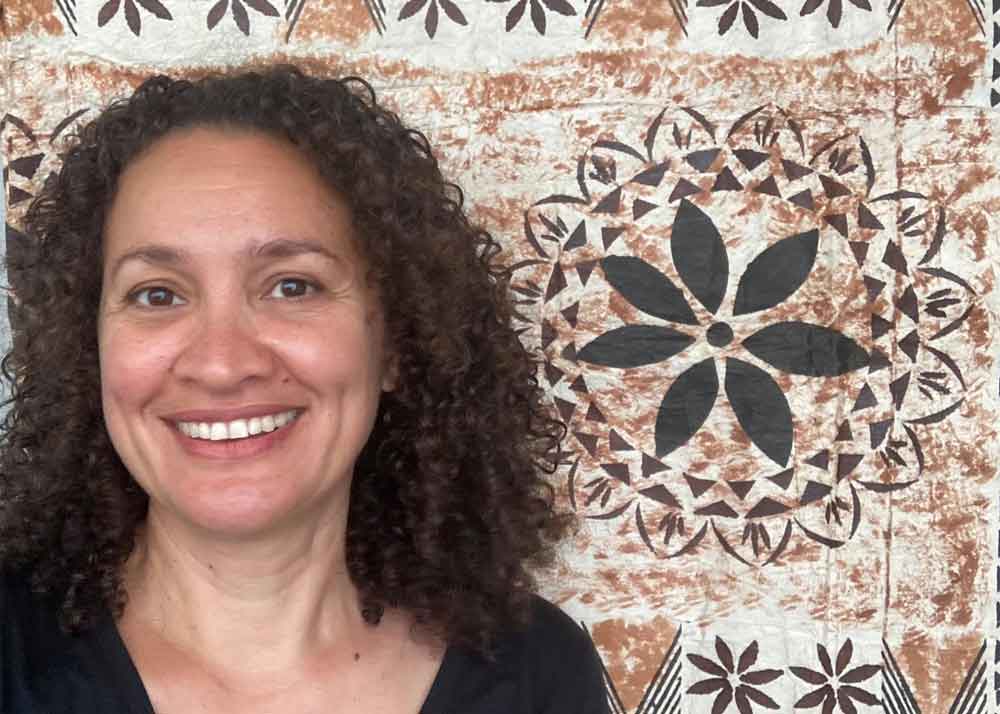
Patrina Dumaru is a Senior Social Scientist specialising in climate resilient development, traditional knowledge and social inclusivity in the Pacific.
Based at the Auckland office, she specializes in climate and disaster risk reduction planning and monitoring and evaluation.
Prior to joining Earth Sciences NZ, Patrina was a researcher at the University of the South Pacific in Suva, Fiji. She holds advanced degrees in Development and Climate Adaptation.
We caught up with Patrina to learn more about her career journey.
Where did you grow up?
I grew up in Suva, Fiji’s capital, and moved to Auckland New Zealand, just over five years ago. Having grown up just minutes’ drive from my village in the Rewa estuary, I was fortunate to learn and appreciate the significance of traditional ecological values and knowledge to place and continuity as well as the myriad opportunities and tensions emerging through urbanisation over time.
Can you describe your career journey and what led you to Earth Sciences New Zealand?
I began my career in Fiji working on community-based natural resource management as the country was developing its first National Biodiversity Strategy and Action Plan, back in 1998. My training in participatory learning and action during my Community Development degree in Australia shaped how I worked with communities, and I carried these approaches through my postgraduate Geography studies at the University of the South Pacific and later into my PhD on climate change adaptation at the University of Melbourne.
Over more than 25 years, I’ve worked in multidisciplinary teams spanning land, water, atmospheric and social sciences, focusing on climate resilience, disaster risk reduction and water-food-energy security in Fiji and across the Pacific Islands Region. My contribution has often centred on integrating traditional and local knowledge and gender and social inclusion into research and community partnerships.
Throughout this journey, I frequently partnered with NIWA and GNS Science - now merged as Earth Sciences NZ. These collaborations gave me a deeper appreciation of the calibre, integrity and impact of their science. Joining GNS Science in 2021 felt like a natural progression: an opportunity to work more closely with teams whose work I respect and to continue bridging social science with earth systems, in my home and favourite place – the Pacific Region.
Is there a Pacific project or initiative that stands out to you and why?
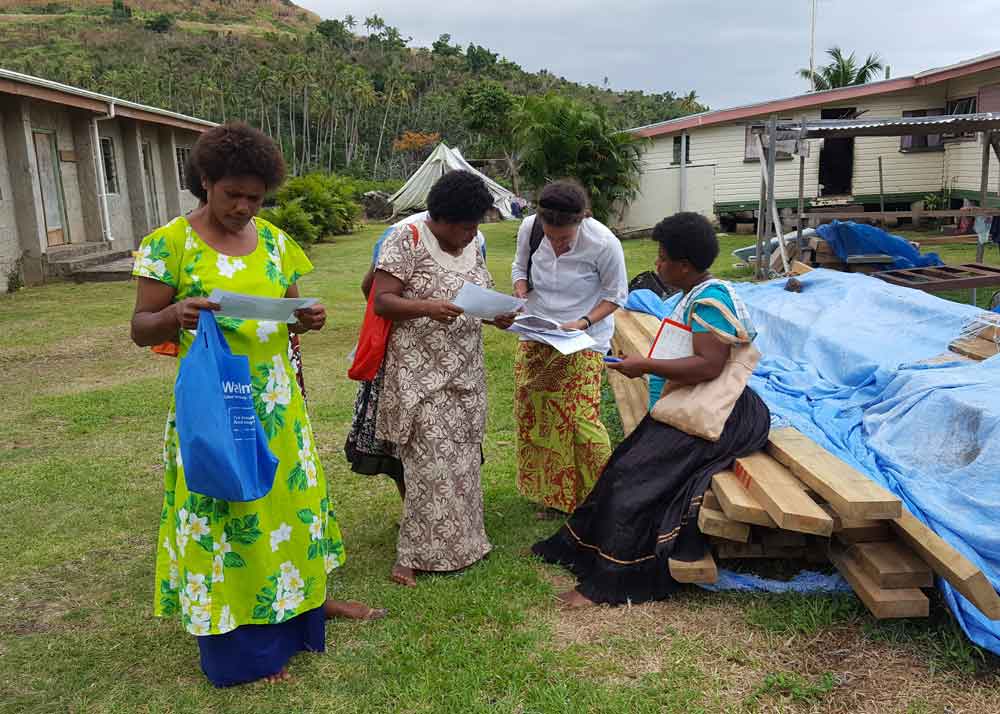
One of the most rewarding experiences in my career was a six-year community-based adaptation project working with six villages across Fiji.
We piloted a truly collaborative approach, bringing together traditional and local knowledge with the expertise of climate scientists and water and coastal engineers. This integration shaped every stage of the process - from assessing climate risks and vulnerabilities to identifying adaptation priorities, and later to monitoring and evaluating change with communities.
The depth of learning from this work was formative. It shaped my doctoral research and has continued to influence the climate and disaster resilience projects I’ve since contributed to across the Pacific and here in Aotearoa New Zealand.
What do you most enjoy about your work?
What I enjoy most about my work is the opportunity to collaborate with scientists, researchers, and innovators from diverse disciplines and cultural backgrounds. I feel fortunate to have spent my career in organisations where these exchanges happen naturally - whether in meetings, over tea and lunch breaks, in the corridors, or during more formal and informal gatherings. These everyday interactions are often where the most valuable insights and shared understandings emerge.
Being part of such diverse teams is essential when partnering with communities to co-create solutions to real-world challenges. It allows us to bring together different ways of knowing, work in ways that honour people and the environment, and contribute to resilience and long-term wellbeing. That collaborative, relational aspect of the work is what I find most fulfilling.
What makes you excited to come to work in the morning?
The people that I work with and what we might think about and do next.