-

Tidal creeks – connections between freshwater and saltwater
Research ProjectAn experiment in Henderson Creek, Auckland, has demonstrated how tidal creeks variously import, export and deposit sediment, depending on the wind and freshwater runoff, and modulated by the tide. -

Summer Series 3: A mako shark named Carol
News article07 January 2013The mako shark is fast and fascinating. The shortfin mako, Isurus oxyrinchus, has been recorded swimming at speeds of about 100km/h. -
Summer Series 2: Get summer sorted with NIWA’s online summertime toolkit
News article04 January 2013Whether you're at the beach, in the bach, on the boat or by the barbecue, summer holiday fun hinges on knowing when conditions outside will be favourable and not-so-favourable for the activities you have in mind. -
Summer Series 1: Ready to rumble - the anatomy of a summer thunderstorm
News article03 January 2013 -
Summer Series 2013
This is a special series of stories put out to the media in the 2012/2013 summer. -

Our World
Compiled by NIWA from the United Nations report "Keeping Track of Our Changing Environment: From Rio to Rio+20 (1992-2012)". -
LakeSPI method summary
A summary of the LakeSPI method. -

Reporting guidelines
LakeSPI delivers information that is directly applicable to lake-ecosystem conservation and management. -
Uses of LakeSPI
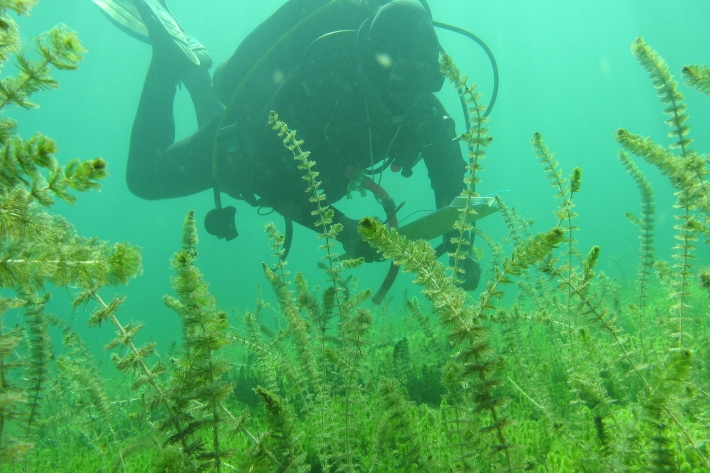
LakeSPI can be used in many ways depending on what the interests or management needs are for a lake. -

How LakeSPI works
LakeSPI (Lake Submerged Plant Indicators) is based on the principle that New Zealand lakes can be characterised by the composition of native and invasive plants growing in them, and the depths to which these plants grow.