In this update we report on research activities over the last five months including a visit from Prof Frances Lucy and a new resource – the ‘Silent super spreaders” video.
First insights from work on the reproductive ecology seeks to confirm the breeding cycle in an Aotearoa-New Zealand context. Much is already known (and published) about the clams breeding cycle, but there are differences in different countries, such as when there are breeding peaks. The team has been looking at water samples from Lake Karāpiro and the clams themselves. We can confirm that a water temperature of 15C and over brings a heightened risk that people will encounter new clams in the water. These new clams are tiny when released from the parent and can go unseen and undetected - because they are so small. So, it is time for increased vigilance with Check, Clean, Dry.
The ESNZ team have been out and about supporting other agencies and community with their understanding about the clam, and what we can all do as citizens to reduce the likelihood of spread and protect our freshwaters.
In October, Merekara Warrington and I were invited to present a webinar “Corbicula fluminea arrives in New Zealand: first record, perspectives and impacts” for INVASIVENET.
Our collaboration with Lincoln Agritech has revealed an emerging trend of potential clam impacts. Declining calcium levels in Karāpiro water have been linked to the presence and growing abundance of the clam. This is an ongoing area of investigation between ESNZ and Lincoln Agritech so that we can better predict impacts and determine what mitigations can be put in place.
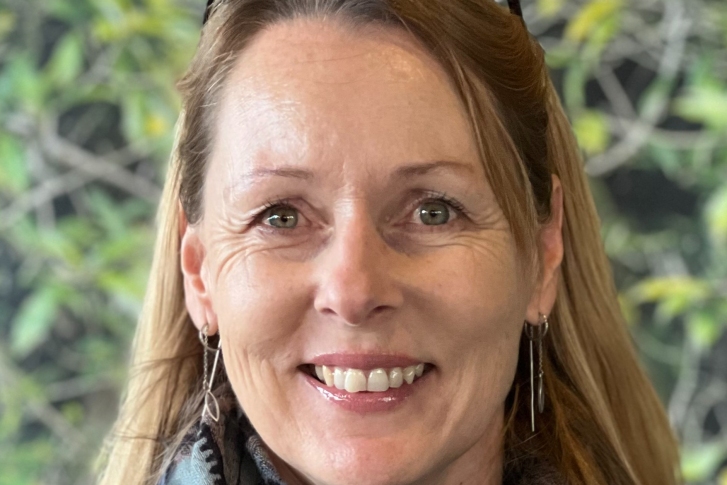
In international news the programme had a boost with aquatic invasive species expert Prof. Frances Lucy visiting Kirikiriroa-Hamilton in November. Prof Lucy, was a member of the Technical Advisory Group that MPI put together on corbicula when it was first discovered in New Zealand. In meetings with the research team, the kaahui and other stakeholders we were all reminded that corbicula is not the worst invasive species that could breach our biosecurity border, and there is an on-going need to manage those pathways to protect our waters and way of life.
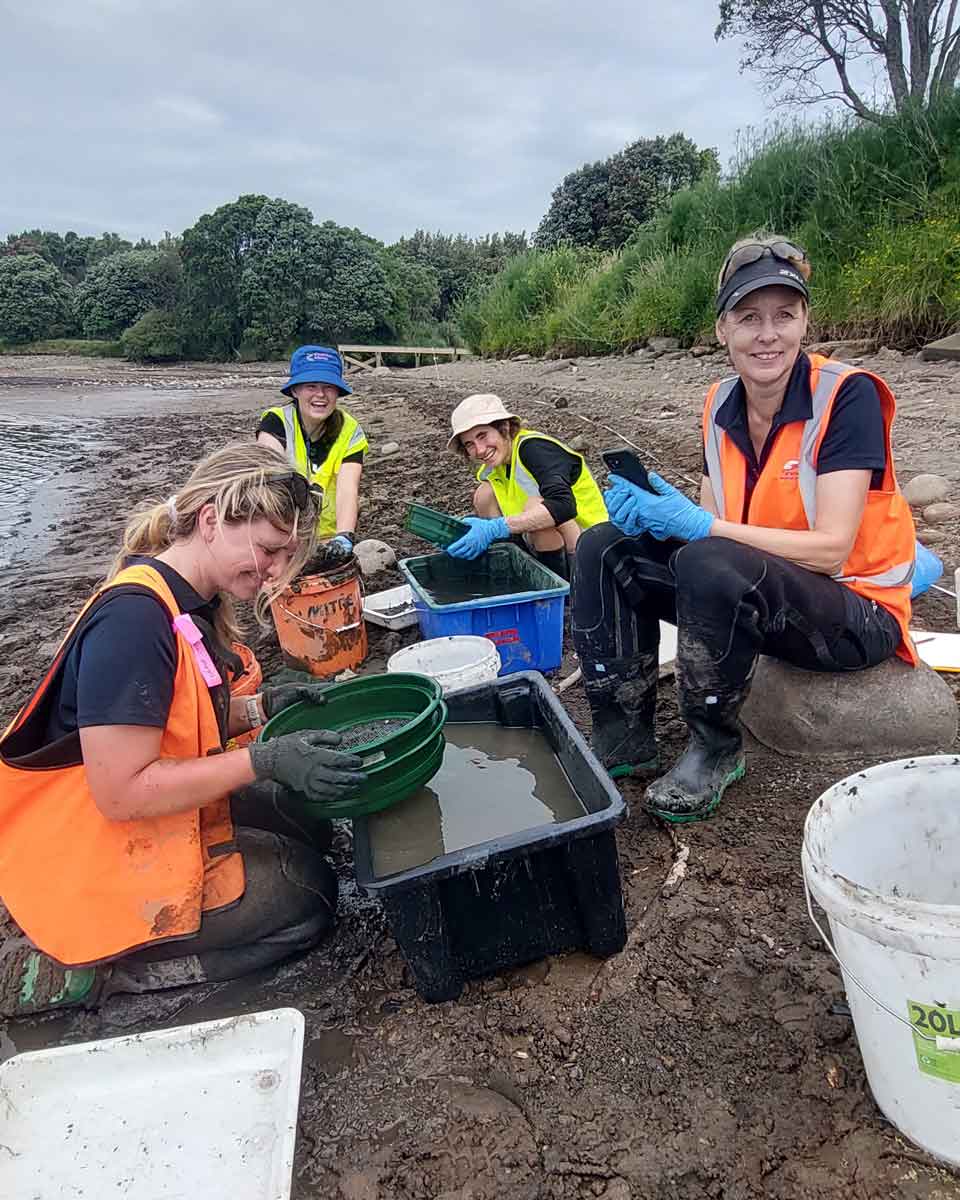
Plus, this week the two students (Blake Interns) are working alongside the team on the first of our benthic barrier (control tools) experiments. They will also be joining our field team as we travel to Taranaki to assist the Regional Council in their response to the corbicula find in Lake Rotomanu. The role of the ESNZ team for the fieldwork will be to survey the lake, following a drawdown, to get a better understanding of the clams abundance. Information that is needed to support the development of the next stage of the response.