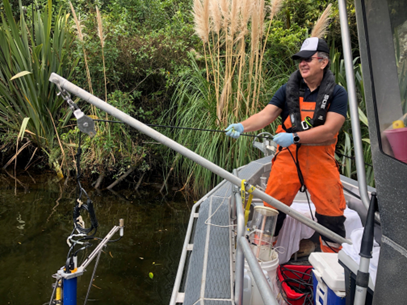
Multiple sites throughout the two lakes are being sampled seasonally for impact and predictive modelling assessment purposes, using water column profiling and biological measurements of phytoplankton, zooplankton, other microbial indicators including bacteria, and water chemistry.
We have finished our third set of field trips, completing seasonal sampling for Autumn, Winter and now the Spring season for which sample analysis is underway.
Autumn and Winter sampling in Lake Karaapiro revealed a marked decline in chlorophyll a concentrations and phytoplankton biovolume from the lake inlet to the outlet, particularly just above the clam beds.
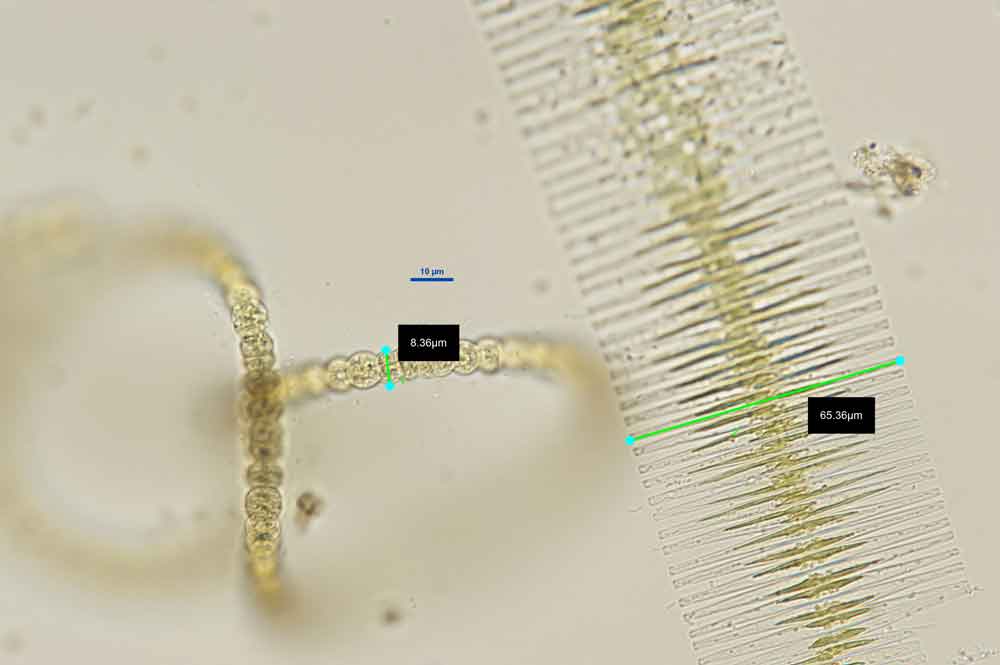
This decline was most pronounced in the >20 µm size fraction, which was dominated by diatoms (notably Synedra sp.) during this period.
Smaller flagellates also showed significant reductions, whereas colonial green algae and cyanobacteria remained relatively stable. Concurrent decreases in E. coli, coliforms, particulate organic carbon (POC), and particulate carbon (PC) were observed in the water column, alongside increases in dissolved nutrient concentrations.
Dissolved calcium levels also declined, likely due to uptake by clams.
Interestingly in Lake Karāpiro, clam density was positively associated with phytoplankton biomass in autumn. These patterns suggest that although total plankton populations decline through the lake—potentially due to grazing pressures— areas with higher plankton concentrations may already be sustaining elevated clam populations.
Trends in Lake Maraaetai appear more complex due to the influence of multiple tributaries entering the lake. However, notable differences are emerging between clam-influenced areas and open waters, with larger declines in phytoplankton biomass and particulate indicators of biomass, such as suspended solids and POC.