
Earth Sciences New Zealand meteorologists are anticipating a significant El Niño influence on weather patterns across the country from winter onwards, potentially bringing reduced rainfall for some areas.
Earth Sciences New Zealand has been monitoring signs of a developing El Niño in the tropical Pacific Ocean for the past six months, with global climate models now showing a clear consensus for an El Niño event to arrive this winter. There is a greater than 60% probability that the event will be classified as ‘strong’ by spring, with the potential to intensify further later in the year.
“La Niña has only just ended, but there are indications that we’ll see a rapid flip to El Niño.”
Jon Tunster, Earth Sciences New Zealand and MetService meteorologist.
El Niño and La Niña are the two phases of the El Niño–Southern Oscillation (ENSO), a natural climate cycle driven by ocean temperatures and atmospheric pressure across the tropical Pacific. During El Niño, warmer-than-average ocean temperatures develop in the central and eastern Pacific, weakening the trade winds, and shifting tropical rainfall towards the central and eastern Pacific.
El Niño’s impacts extend downstream of the circulation changes in the tropics, shaping our weather here in New Zealand.
What this could mean for New Zealand
While ENSO only accounts for some of our weather variability, it plays a key part in influencing where areas of high pressure tend to sit over the country.
Tunster says the forecast atmospheric response from this upcoming El Niño could strengthen the tendency for high-pressure systems to anchor themselves over the Australian continent during winter, resulting in a south-westerly flow over New Zealand.
“This could bring increased rainfall to Southland, parts of Otago, and western facing areas, primarily of the South Island, but reduced rainfall for much of the remainder of the country.
“Dryness could become an issue as spring approaches, for areas that see a reduction in their normal winter rainfall such as the east of both islands, or the upper North Island.”
Although south-westerly patterns can be associated with cold winters, at this stage he says it appears unlikely that a nationwide colder than usual winter will occur.
“We could see occasional cold snaps, lasting a few days at a time – except in inland parts of the South Island where the cold air can linger for longer periods. Or a colder-than-average month within an otherwise near-average season,” says Tunster.
Dramatic impacts on globally important large-scale weather systems look likely, including the Indian monsoon and the North Pacific storm track.
“Given the projected strength of this event, it will be very surprising if New Zealand doesn’t feel some impacts,” says Tunster. “However, surprises are always possible.”
Earth Sciences New Zealand’s Seasonal Climate Outlook will provide updates as El Niño event unfolds. For a deeper dive on how we monitor ESNO and the potential impacts of this El Niño event on New Zealand, check out this blog post from Jon Tunster.
The signs that El Niño is on the way
There are multiple indicators pointing to the development of an El Niño event this winter.
Earth Sciences New Zealand uses a measure of ENSO conditions known as the Relative Oceanic Niño Index (RONI). This index is designed to track the crucial east–west temperature gradient across the tropical Pacific, allowing more reliable detection of both El Niño and La Niña events within the context of general ocean warming due to climate change. RONI forecasts from multiple models are showing a rapid rise over the coming months, consistent with the onset of El Niño.
Beneath the ocean surface, conditions are also aligning with past El Niño events.
“One of the most striking observations is a steady eastern movement of extremely warm water beneath the surface of the tropical Pacific Ocean. This has been a precursor of significant El Niño events in the past when these warm waters are eventually brought to the surface,” says Tunster.
Finally, models are forecasting a very strong atmospheric response as the warm sub-surface waters reach the surface, with a dramatic change expected in the location of the major rising and sinking areas of air in the global tropics. These changes in tropical circulation trigger cascading effects around the world.
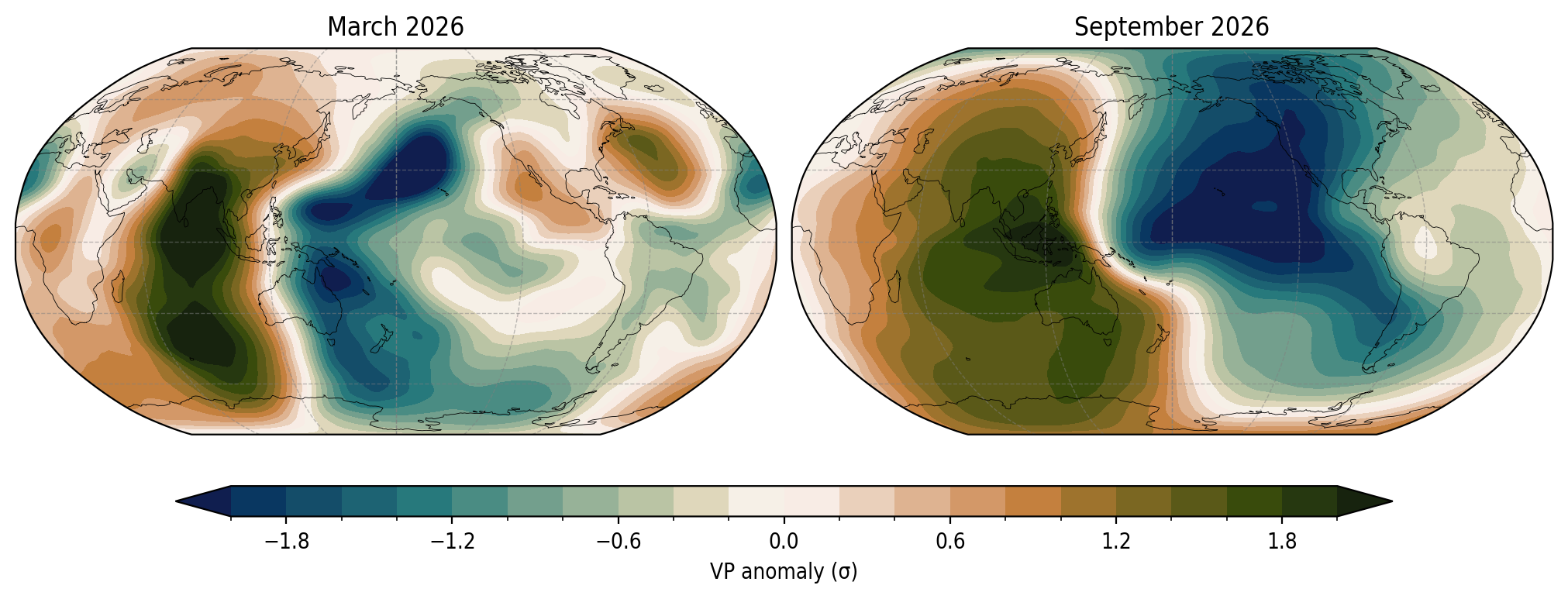
“Together the ocean surface warming, the build‑up of heat below the surface, and the consistent signal across many climate models give us high confidence that El Niño is on the way,” says Tunster.
See more details at: From our forecasters: Winter 2026 may see the start of a formidable El Niño event