Testing Ocean Solutions for Climate Mitigation using Natural Analogues
This Endeavour Fund programme will assess the potential and risks of three proposed marine carbon dioxide removal techniques by studying their natural equivalents in New Zealand coastal and open-ocean waters. The programme will run over a term of five years from 2025-2030.
Marine Carbon Dioxide Removal (mCDR) techniques are attracting considerable interest and investment worldwide, but many are still at the theoretical and laboratory-scale with less than a handful of tests carried out in the ocean.
This multi-disciplinary team integrates national and international expertise in marine carbon cycling and mCDR from around the world.
Before mCDR can be considered as a climate solution protocols need to be developed to ensure that these approaches can be verified and monitored to ensure they are effective and environmentally safe
The programme
Overview
The programme takes an alternative approach of using natural analogues of proposed mCDR techniques to evaluate their potential feasibility and develop measurement and verification protocols, and guidelines for environmental risk assessment. This will include field research campaigns to study terrestrial inputs of alkalinity, wood carbon deposited on the seafloor following Cyclone Gabrielle, and carbon transfer from natural phytoplankton blooms to the deep ocean. Regional context for mCDR will be obtained by development of a marine Carbon budget for Aotearoa NZ waters, with results used in coupled models to assess the potential of mCDR in the current and future ocean.
Research directions and alignment will be facilitated by a National Advisory Panel, which will enable uptake of programme findings in policy and governance on mCDR.
Natural analogues of proposed mCDR techniques
Alkalinity addition
How does it work
Alkalinity addition is the process of adding alkaline substances (such as limestone or olivine) to the marine environment to increase the buffering capacity of the ocean to absorb CO2.
This addition increases the pH and converts dissolved CO2 into bicarbonate, which reduces dissolved CO2 in the ocean and in theory increases uptake of CO2 from the atmosphere.
Natural analogue
Rivers and submarine groundwater naturally transport alkalinity into the marine environment derived from the chemical weathering of carbonate and silicate rocks on land.
Where in NZ
Te Matau-a-Māui Hawke Bay
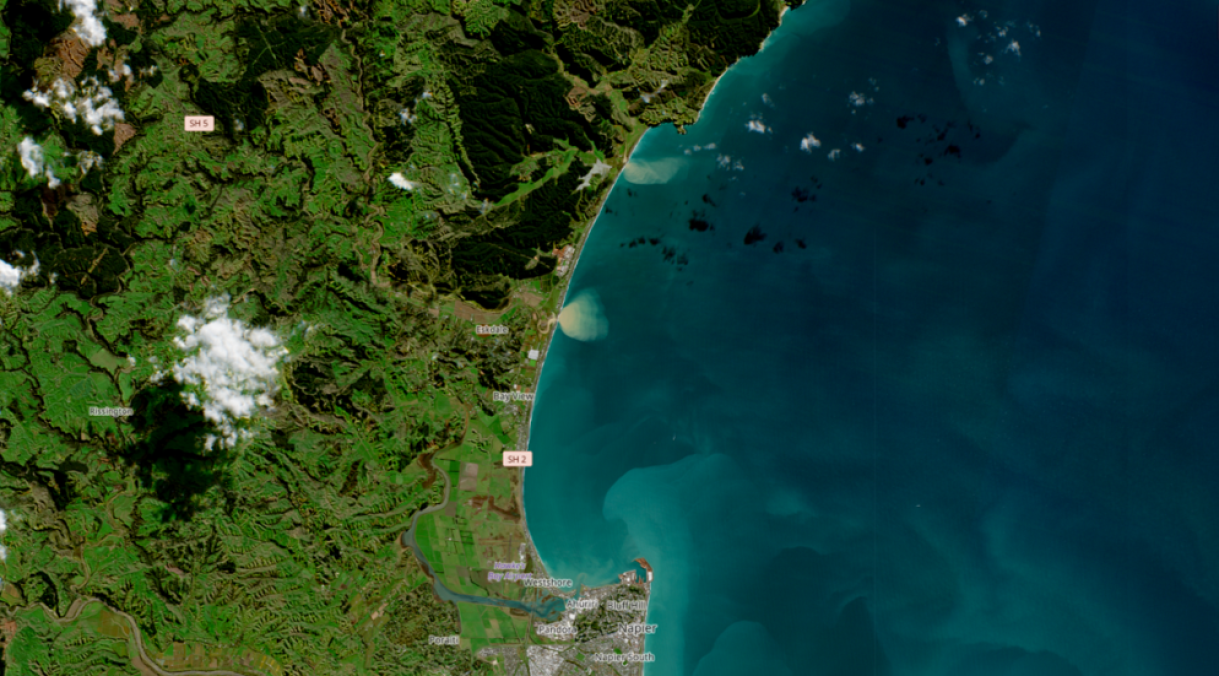
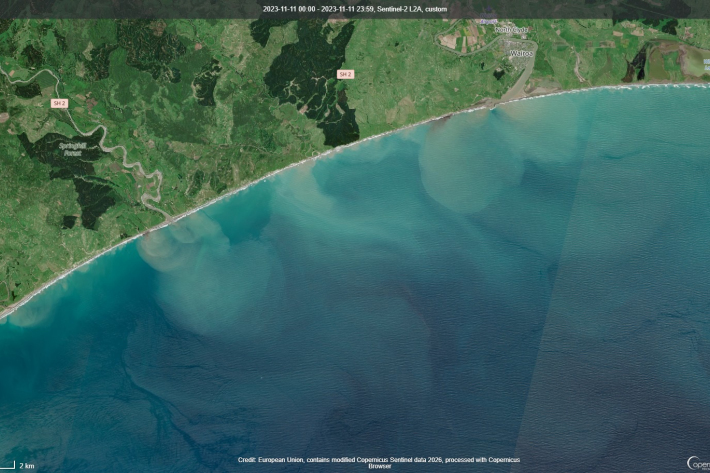
Two river plumes sites in Hawke Bay from Sentinel-2 L2A True colour satellite obtained from the Copernicus Browser.
Terrestrial biomass sequestration
How does it work
Trees and plants naturally capture CO2 when they grow and transform it into biomass. Proposed mCDR techniques aim to deposit this biomass, from forestry or agricultural crops, into the deep ocean in regions with low oxygen, where carbon would be stored away from the atmosphere .
Natural analogue
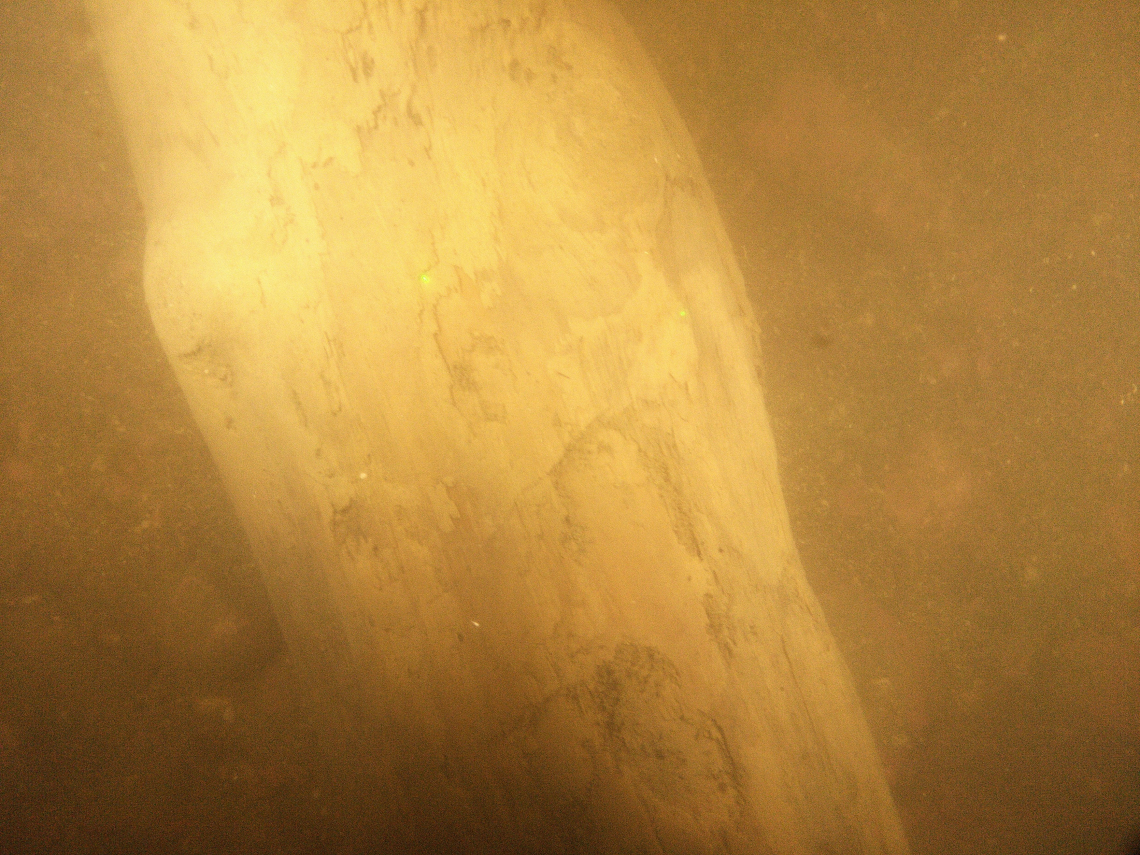
Seafloor wood deposition resulting from Cyclone Gabrielle
Where in NZ
Te Matau-a-Māui Hawke Bay
Nutrient addition
How does it work
This proposed mCDR technique aims to artificially increase nutrient availability in certain regions of the ocean to boost phytoplankton growth. Because phytoplankton uses CO2 as carbon source, increasing phytoplankton biomass would decrease the amount of CO2 dissolved in the water, and so enhance ocean uptake of CO2 from the atmosphere, whilst also storing carbon in the deep ocean when phytoplankton die and sinks.
Natural analogue
Phytoplankton blooms that naturally occur in spring and summer in subantarctic waters in New Zealand
Where in NZ
Campbell plateau
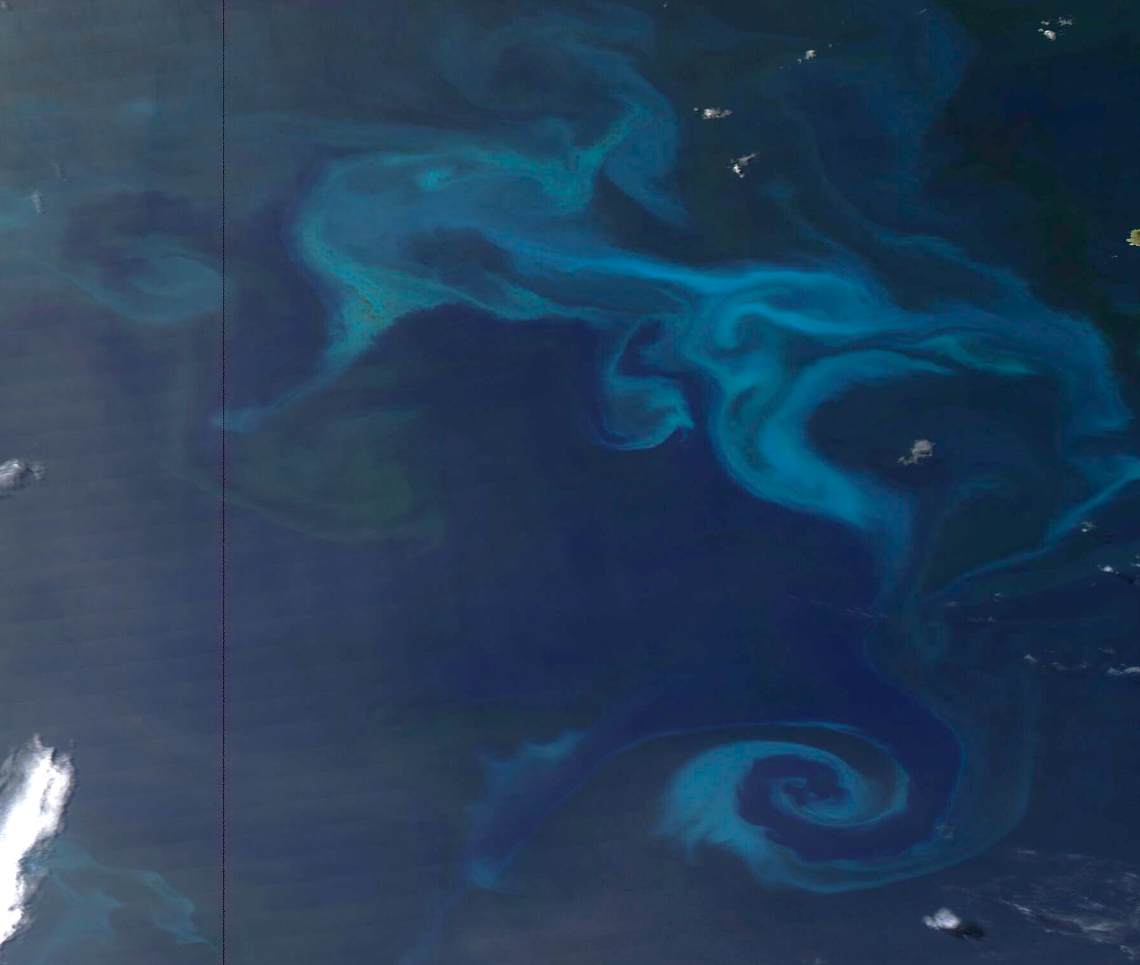
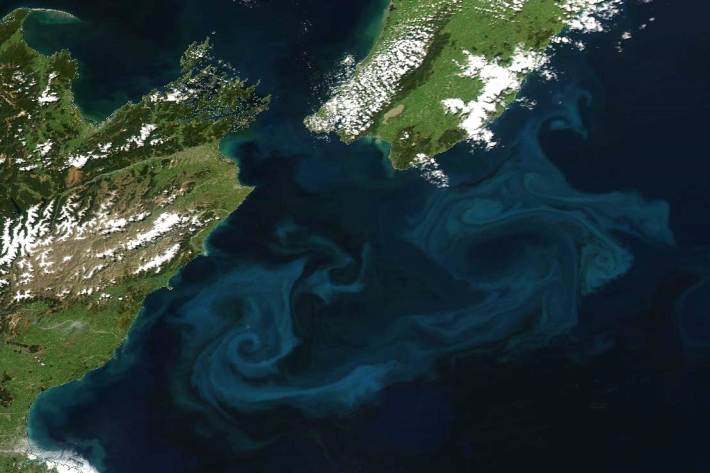
Phytoplankton bloom obtained by NASA Worldview
Our Partners
All Partners
National
University of Otago, Ngāti Kahungunu Iwi Incorporated, University of Auckland, Traverse Environmental and Victoria University of Wellington, and University of Canterbury.
International
Instituto Español De Oceanografia (IEO, Centro Oceanográfico De Gijón), Scripps Institution of Oceanography, Commonwealth Scientific and Industrial Research Organisation, University of Tasmania, Institut Universitaire Européen de la Mer, Florida State University, University of Antwerp, GEOMAR Helmholtz Centre For Ocean Research, Plymouth Marine Laboratory, Dalhousie University, [C]Worthy.
News
-
Launch of new MBIE research programme – “Catching Marine Carbon”
Blog22 April 2026The kick-off meeting for the new $11M 5-year MBIE Endeavour Research Programme “Catching Marine Carbon: Testing Ocean Solutions for Climate Mitigation using Natural Analogues” (NIWA project END25304) was held at Greta Point on 22nd April. -
Mihi whakatau/wananga and karakia to launch fieldwork on Ocean Alkalinity
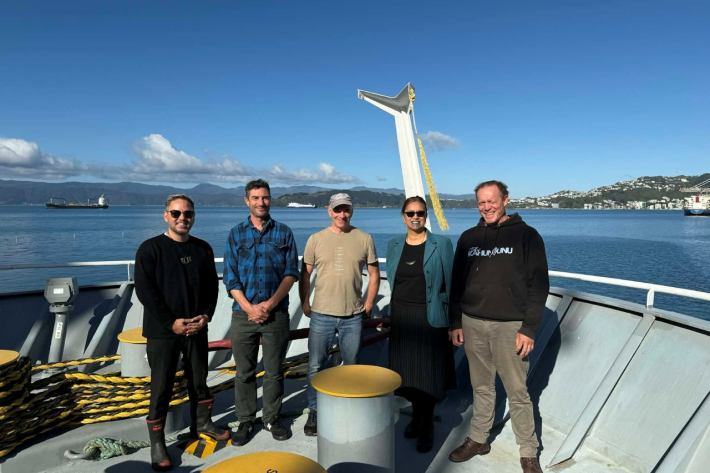
Blog12 May 2026A mihi whakatau and wananga were held at Mana Ahuriri Trust headquarters in Ahuriri Napier on 11th May as part of the “Catching Marine Carbon” programme (NIWA project END25304). -
Using Hawke's Bay's rivers to unlock the mysteries of marine carbon storage
RNZ ArticleMajor research to test whether lowering the ocean's acidity could help to fight climate change will get underway in Hawke's Bay on Tuesday. -
Research voyage seeks out natural climate regulator
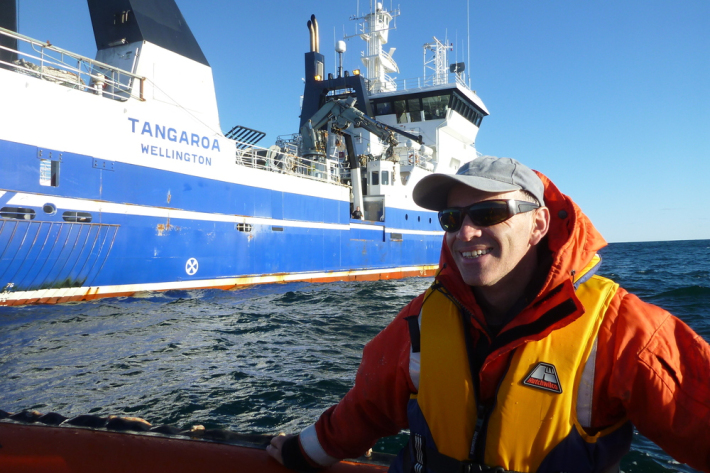
Media releaseEarth Sciences New Zealand scientists and crew will set out next week on the research vessel Tangaroa to investigate the natural uptake of atmospheric carbon dioxide (CO2) by the ocean.