Earth Sciences New Zealand are creating an AI-driven national forecasting system to effectively manage marine heatwaves. These operational forecasts will be multi-month and produced at a fraction of the cost of overseas numerical ensemble forecasting systems.
Ocean temperature extremes, also known as marine heatwaves, are becoming more frequent and intense globally. New Zealand’s ocean is warming fast and has experienced as series of intense marine heatwaves over the last decade. That has caused widespread damage to marine ecosystems and businesses, with negative impacts only expected to grow.
This work is funded by the Ministry of Business, Innovation and Employment’s Smart Ideas Fund.
Current forecasting abilities
Numerical ensemble forecasting systems are typically used overseas to predict temperature extremes months in advance, enabling restoration activities and helping businesses to prepare for approaching marine heatwaves.
However, these forecasting systems are electricity and labour intense, which are resource constraints that prevent similar systems to be established and maintained in New Zealand.
Overseas, AI initiatives are growing rapidly to improve these forecasting systems and may ultimately replace them altogether.
Project scope
This project follows these international AI initiatives and aims to develop forecasting capabilities for New Zealand at a fraction of the cost of classical forecasting systems.
A novel AI approach to predict temperature extremes down to a few kilometres, months in advance.
These publicly available forecasts, covering all of New Zealand’s oceans, will allow marine businesses, iwi, and regulators to prepare for the impact of approaching marine heatwaves in their management decisions.
This will enhance the competitiveness of New Zealand exports by enabling businesses to better manage their resources, set prices, and increase climate resilience.
Approach
This project brings together a team of international and national AI experts to harness experience, develop and test new techniques, and identify the best approach for our nation.
A promising avenue is through an ocean emulator, which has been developed by the University of California, Santa Cruz. An emulator uses learned historical relationships to infer future conditions, with this one predicting ocean currents and sea surface height several months in advance.
We will extend and modify this emulator to include temperatures and temperature extreme predictions. The data to learn these relationships is based on a fine scale ocean and atmospheric model that incorporates ocean heat transfer, swirling ocean currents, ocean layers, winds and radiation – all of which are important drivers for marine heatwaves around New Zealand.
When the emulator is provided with this data it will generate predictions for the most likely marine & heatwave conditions over the next months, down to a few kilometre scales.
In-situ observations, including through our iwi partner Te Tiaki Mahinga Kai will be used to assess the forecast’s accuracy and fine tune it.
Two user workshops will be held over the next 3 years to gather information about the requirements of national users, which will inform the final emulator design and facilitate the uptake of the forecasting products.
Project lead
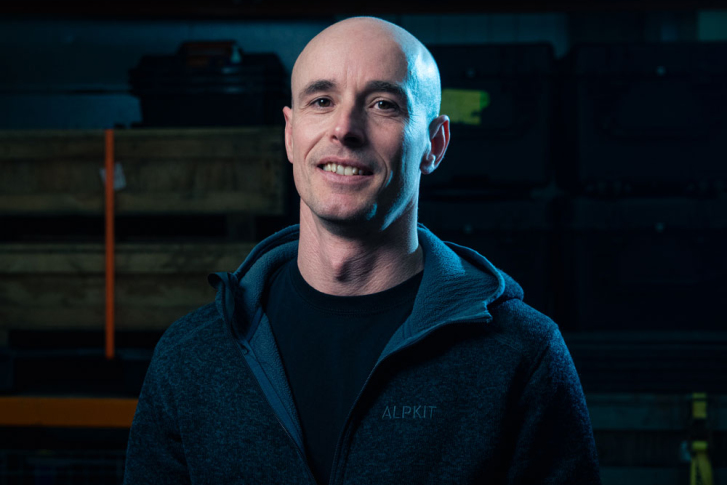
Dr Erik Behrens, Physical Oceanographer, Earth Sciences New Zealand
Partners/collaborators
- Chen Wang, Earth Sciences New Zealand
- Craig Stevens, Earth Sciences New Zealand
- Ashesh Chattopadhyay, University of California, Santa Cruz
- Sophie Cravatte, IRD (France)
- Neil Holbrook University of Tasmania
- Tom McCowan Paua Industry Council
- Feng, Ming (Environment, IOMRC Crawley), CSIRO
- Li, Zeya (Environment, IOMRC Crawley), CSIRO
- Daniel Pritchard, Te Tiaki Mahinga Kai
- Claire Spillman, Bureau of Meteorology (Australia)