Earth Sciences New Zealand researchers are studying the optimal growing conditions of aquatic plants to help restore degraded lakes.
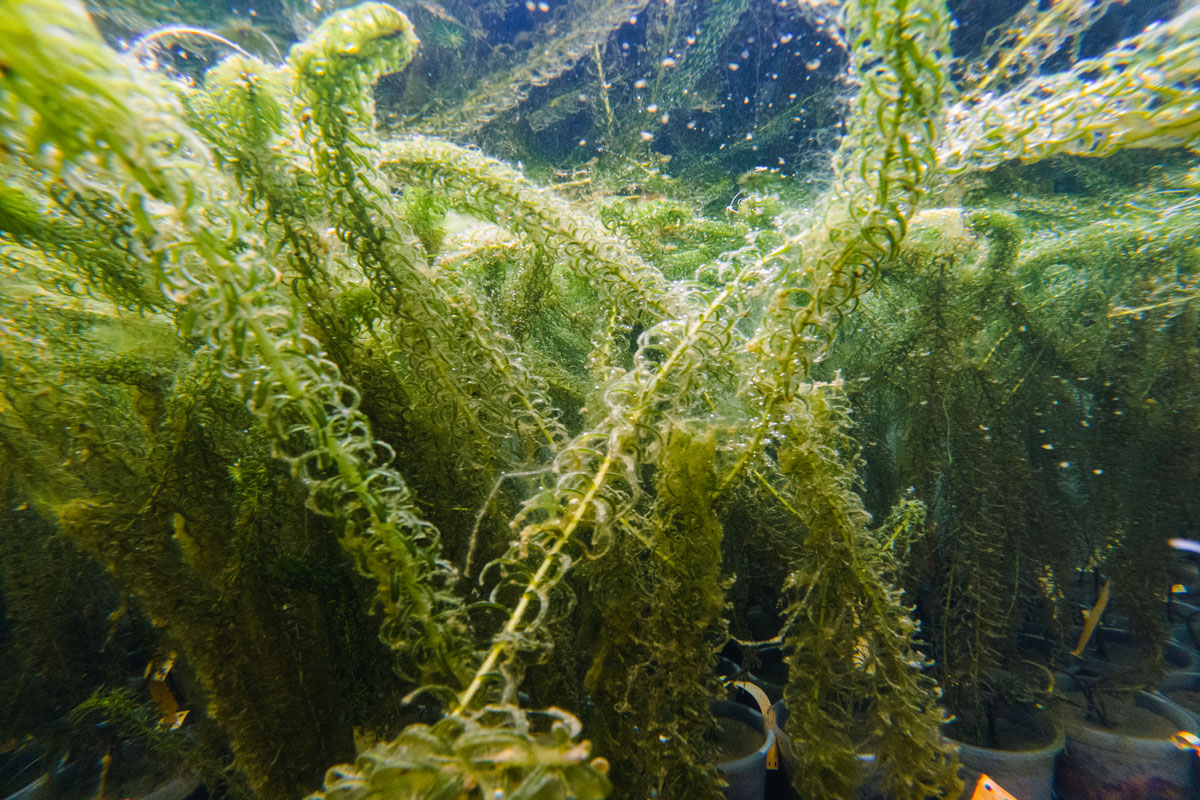
Many of our shallow lakes are ecologically degraded. Algal blooms block light, organic material in run-off from land increases oxygen demand, and pest fish disturb sediment. This prevents the growth of submerged native plants (macrophytes).
Successfully replanting macrophytes would help improve lake health by restoring damaged ecosystems. However, while much is known about how to successfully grow terrestrial plants, knowledge is lacking for submerged species.
Restoring our lakes
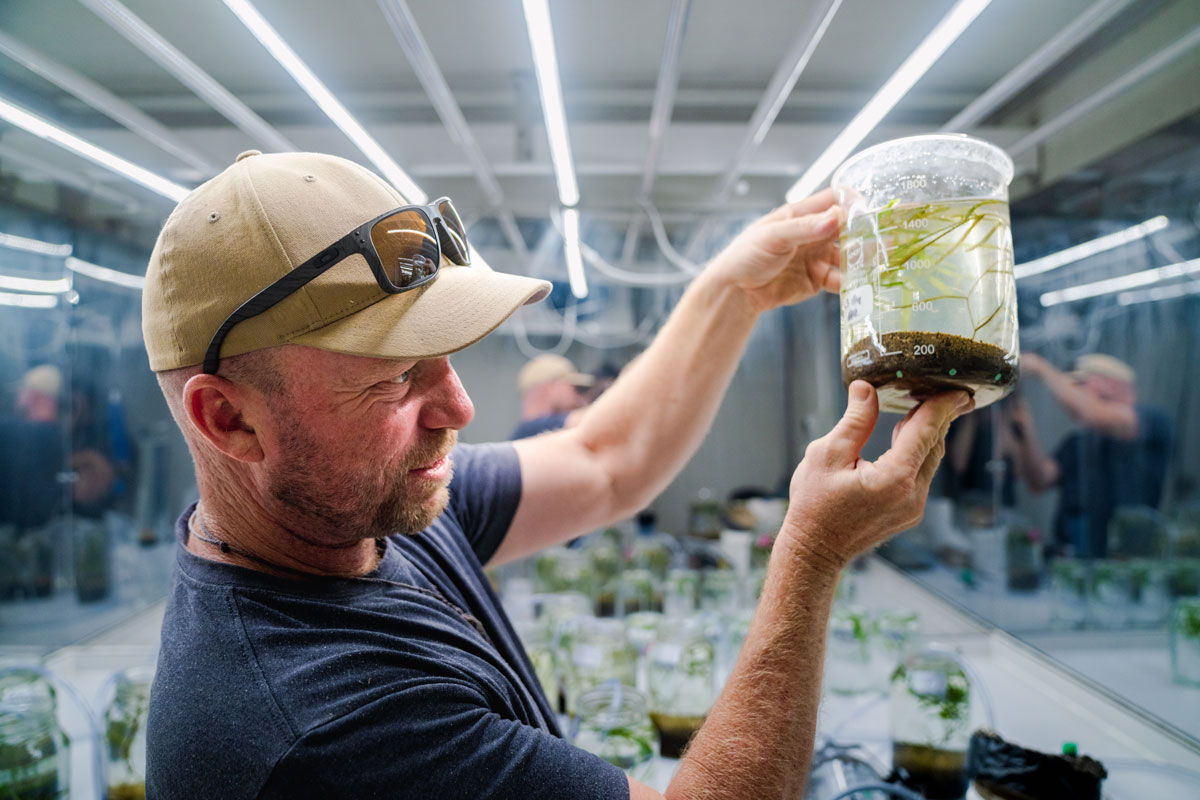
Researchers at Earth Sciences NZ’s Ruakura Aquatic Research Facility are working to identify in-lake locations where specific macrophyte species receive enough light to maintain healthy roots and survive.
The research will help scientists and lake managers understand where to re-introduce submerged macrophytes. This should ultimately restore freshwater ecosystems and create healthy bodies of water that everyone can enjoy.
Combining new technologies with established science
Scientists theorise that for submerged macrophytes to survive in lakes, an oxygenated zone must protect roots from rotting.
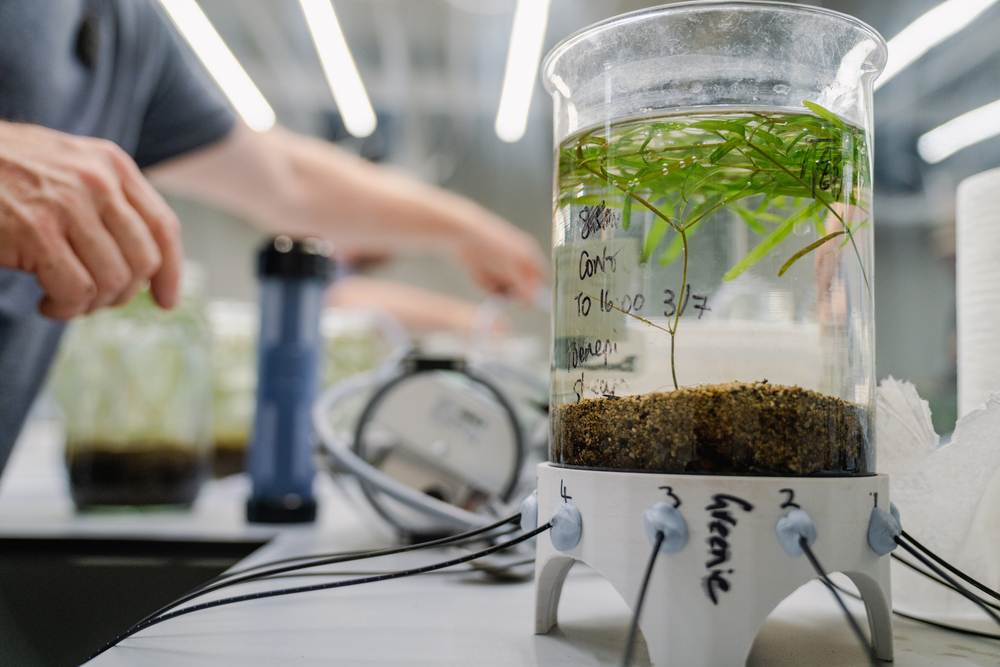
This project will use a novel method involving optical oxygen sensors that quantifies oxygen release from the roots.
Scientists will estimate the rate at which oxygen is consumed at night, when no photosynthesis is occurring, and then estimate how much oxygen is being released from the roots when photosynthesis is occurring during the day.
This will be tested on different macrophyte varies and compared with varying stressors. One will be water clarity, where the large flume at the Ruakura Aquatic Research Facility will vary light availability by covering the flumes with different quantities and strengths of shaded cloth. Sediment organic content and loss of above ground biomass will also be studied.
This will define the plants’ tolerance limits, with the data put into lake simulations that will model how the re-introduction of submerged plants improves conditions of degraded lakes.
This work is a recipient of MBIE’s Smart Ideas Fund.