
Frequently asked questions and answers
What is endothall and what is it used for?
Endothall (Endothall dipotassium) is a herbicide (chemical) that has been registered for the control of freshwater submerged (underwater) weeds in New Zealand since 2004. Susceptible target weeds include Lagarosiphon major and Ceratophyllum demersum. Endothall is usually sold in New Zealand as Aquathol®K.
Why do we need to control submerged freshwater weeds?
Invasive submerged weeds in our lakes and rivers are not native to New Zealand and grow taller and more densely than native plants. They prevent native species from thriving in their natural environments. The size and density of these invasive weeds can also disrupt the recreational use of our lakes and rivers, takeover and interfere with the use of water for hydrogeneration or irrigation. Without control measures, these weeds will overrun our lakes and rivers.
How does endothall help control submerged freshwater weeds?
When endothall is applied at approved rates to water in which weeds are growing, the plants uptake the chemical and transport endothall through some tissues (i.e., some systemic action).
The herbicidal action is dependent upon the concentration of the herbicide in the water, and the amount of time plants are exposed to the herbicide (i.e., dose). Parts of susceptible weed species that are exposed to endothall at a sufficient ‘dose’ will die and can include parts of the plant that are buried in the sediment. Therefore, under certain conditions endothall can kill all treated weed.
How is endothall applied?
Strict rules around the use of endothall are set under a permission process by the New Zealand Environmental Protection Authority (EPA). Resource consents are additionally required from regional councils that must comply with the EPA controls.
These controls include the maximum concentration of herbicide permitted in a waterbody, and the area of the waterbody that the herbicide is applied to (usually ≤25% waterbody area).
The maximum allowed concentration in the treated area is 5 parts endothall in one million parts of water (5 pm) but weed control may be achieved at lower concentrations. The herbicide can be applied to water of the target area as a liquid formulation or pellet formulation in New Zealand.
Endothall can be applied via hand-held sprayer, by boat with submerged boom or trailing hoses or from the air (e.g., by helicopter).
Does endothall affect people using lakes and rivers?
Endothall has no risk for human health at the concentrations used for submerged weed control under prescribed use. However, precautions under the EPA permissions include restrictions on swimming for 24 hours after herbicide application, taking of fish for three days, and use for drinking, livestock watering or irrigation for between 7 to 25 days depending on the herbicide concentration sought. In contrast, most of the restrictions for use of the herbicide (apart from drinking water) in the United States have been removed after a more recent review of new scientific data on endothall.
Will endothall affect aquatic life?
Endothall use has a low risk for our native aquatic plants and animals. Some desirable native plants are unaffected (e.g., charophytes), while others can recover from injury or from seed in the sediment. Endothall is not used in New Zealand waterbodies within 1 km of the sea, and connected to the sea, during May to August inclusive, as a precaution for migrating fish larvae.
But isn’t endothall described as toxic to aquatic life?
Like most chemicals and medications, endothall is considered toxic in its concentrated form. What is most important in assessing toxicity is the dose, or exposure to a substance. An effective concentration for weed control is approximately 3-5 ppm endothall. These endothall concentrations are well below toxic levels for mammals, birds, invertebrates and fish, providing a margin of safety for aquatic animals from herbicide application.
What happens to the endothall?
Endothall does not bioaccumulate or persist in aquatic environments. The herbicide is diluted in water and broken down by microorganisms into carbon, hydrogen and oxygen. Water temperature and the level of microbial activity can have a strong influence on the rate of breakdown. Breakdown rates are typically slower in cooler water temperatures. The typical speed of breakdown of the herbicide results in half the endothall decaying within 4–10 days, and all within 30–60 days.
Why is endothall used instead of other weed control methods?
There are a handful of control methods for aquatic weeds, and each has advantages and disadvantages based on the situation. Endothall, like the aquatic herbicide diquat, can be applied quickly over large areas in a short space of time. However, endothall can be used successfully in situations where the water or plants are dirty, conditions that would make diquat ineffective. Endothall can also control parts of plants in the sediment through transport of the herbicide within the tissues. A limitation is that endothall needs to be in contact with plants for longer than diquat and can be diluted too quickly to be effective.
Endothall has been used to eradicate susceptible weeds in small New Zealand water bodies where, either EPA permission has been granted to treat the entire waterbody, or a partial water body application (e.g., ≤25%) has achieved sufficient concentration for long enough to kill the weeds.
Download
Fact checking
Some systemic action (movement of herbicide through plant tissues) was established by experimental studies.
Ortiz, M., Nissen, S., Gray, C. 2019. Endothall behaviour in Myriophyllum spicatum and Hydrilla verticillata. Pest Management Science. https://doi.org/10.1002/ps.5404.
Degradation of endothall is primarily microbial and the half-life (the time it takes for half of the active ingredient to degrade) of the dipotassium salt formulations averages four to ten days, although dissipation due to water movement may significantly shorten the effective half-life in some treatment scenarios.
Endothall poses no risk to water users if water use restrictions are followed. Endothall is not a neurotoxicant or mutagen, nor is it likely to be a human carcinogen.
Download: Wisconsin Department of Natural Resources Endothall Chemical Fact Sheet [PDF 120 KB]
At a maximum treatment concentration of 5 ppm, a margin of safety exists (see Figure 1) since the treatment concentration is lower than the critical concentration for significant harm (i.e. half the population dying) for the most sensitive animals.
Aquatic Toxicology Notes: Endothall1
Acknowledgement
Funding for this FAQ/factsheet was provided by Department of Conservation.
Related information
-
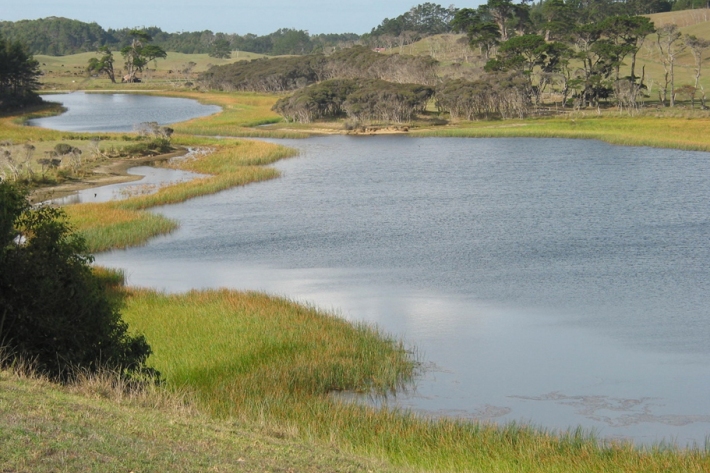
Success – weed eradication from a Northland lake
Early detection leads to successful lake-wide eradication of a freshwater pest plant, highlighting the value of long-term research. -
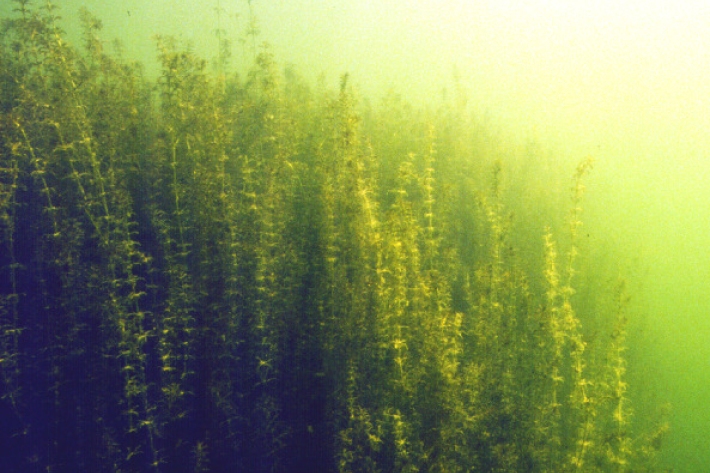
Eradicating the world’s worst aquatic weed
Four decades after its accidental introduction, hydrilla – known as the world’s worst submerged weed – has been almost completely eradicated from New Zealand. -

Spraying as a solution
When invasive aquatic weeds establish in a lake, they usually result in detrimental effects on native biodiversity, amenity and utility values. -
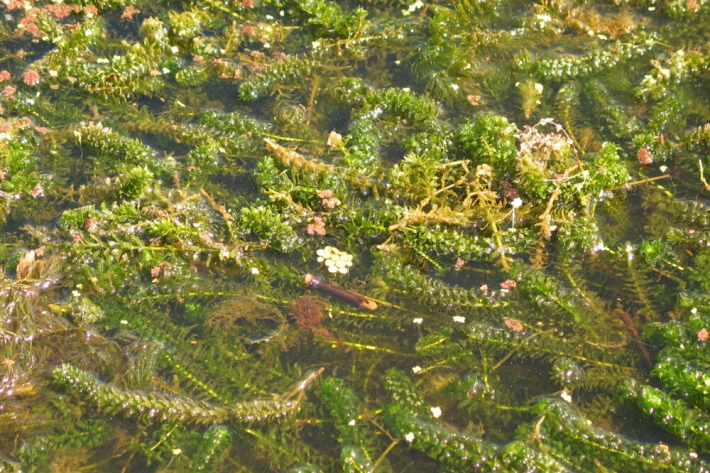
Solutions
One of the world’s worst freshwater weeds was threatening lakes in Hawke’s Bay. Now, it is almost gone.