
-
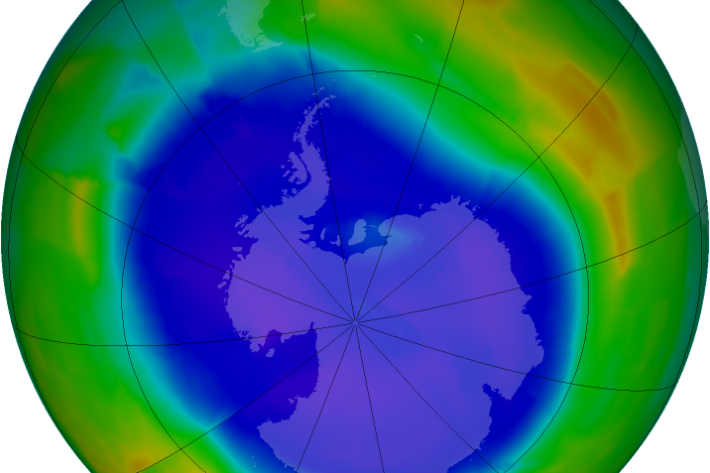
Ozone depleting substance found to be rising
News article06 November 2014NIWA researchers have made a prominent contribution to new research showing the international treaty to protect the ozone layer is working ¬- despite the discovery of increased levels of ozone-depleting hydrogen chloride in the Northern Hemisphere. -

Community Observation Networks for Air (CONA): previous projects
CONA studies in Rangiora in 2015-17 and Alexandra in 2018 have proven that the technologies and methodologies used provide valuable data to support mitigation efforts by local authorities. -

DeepWave project measures gravity waves in the atmosphere
News article03 July 2014One hundred people, a Gulfstream jet, some of the best technology available and two scientists in a paddock are undertaking an experiment that will make predicting the weather a lot more accurate. -
Southern Alps focus for large international science experiment
News article06 June 2014NIWA scientists are this month taking a significant role in one of the largest science experiments to take place in New Zealand. -
Too much or not enough? Spotlight goes on UV research
News article11 April 2014Scientists, dermatologists, skin cancer experts and health professionals are among those meeting in Auckland next week to discuss the latest research into UV radiation and how best to improve public awareness of UV issues. -
NIWA flying helikite during balloon fiesta
News article11 March 2014Among the colour and spectacle of this week's Wairarapa Balloon Fiesta will be a small but crucial flying contraption known as a helikite. -
Summer series extra: Beware the humidity blues
News article21 January 2014In summer, extreme humidity – high and low – can send us round the bend. So what is it, why does it make us feel so bad, and how can we beat it? -
What is a mass spectrometer?
Education ResourceMuch of NIWA's science uses an instrument known as a mass spectrometer. But what is a mass spectrometer, and how to they work? -
Nitrous oxide
Research ProjectNitrous oxide (N2O), commonly known as laughing gas, is an important greenhouse gas. Naturally produced by bacteria in soils and oceans, agriculture is the main source of human-produced nitrous oxide. -
Ozone
Research ProjectThere is a marked seasonal cycle in surface ozone (O3), with a maximum in winter and minimum in summer. There can also be significant variability from day to day caused by synoptic scale meteorological variations. -
Carbon monoxide
FacilityCarbon monoxide (CO) plays a key role in atmospheric chemistry because it is the largest sink for hydroxyl radical (OH). OH is often called the 'detergent' of the atmosphere because it destroys many harmful pollutants.